
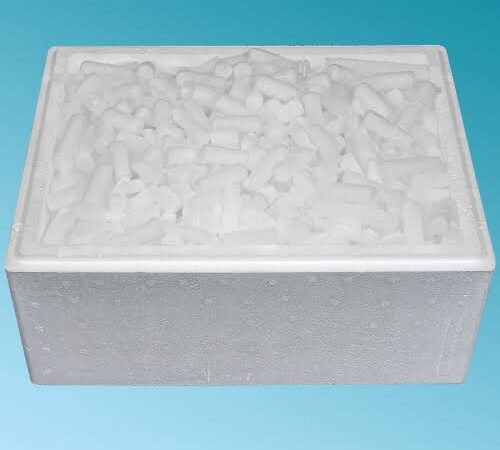
Laboratories, clinics, and diagnostic centres in Karachi move temperature-sensitive samples every day: blood samples, tissue samples, vaccines, reagents, and research specimens. Many of these must stay frozen solid during transport — and when a sample thaws in transit, the test result can be wrong, the sample unusable, and the whole trip wasted.
Dry ice is the standard answer for frozen sample transport, and for good reason: at −78.5°C it holds samples far below freezing for 24–48 hours in a good insulated box, without the water damage that melting ice causes. This guide explains how labs and clinics in Karachi use it correctly.
Why Dry Ice for Medical and Lab Samples?
Most lab samples that need freezing must stay at −20°C or colder, and some — certain reagents, tissue samples, and research specimens — need −70°C or below. Regular ice at 0°C cannot do this at all. Gel packs start cold but warm steadily, and on a long Karachi route with traffic delays they may cross the danger line before delivery.
Dry ice sits at −78.5°C and stays there as it sublimates, so it covers even ultra-low requirements with margin to spare. It also turns directly into gas instead of melting into water, so samples, labels, and paperwork stay dry — a real advantage when a soaked label means an unidentified sample. See our comparison of dry ice, gel packs, and regular ice for the full trade-offs.
Choosing the Right Container and Packaging
Never ship samples loose in a bag with dry ice. The professional setup is: sealed primary sample tubes, placed in a sealed secondary container (a zip bag or leak-proof box), packed inside a thick EPS thermocol box with dry ice around them. The secondary container matters — if a tube leaks, it must not contaminate the box or other samples.
Use a sturdy thermocol box, not a thin foam tray. Our thermocol box guide compares 3kg and 5kg sizes; for lab work, choose the box by the sample load and route length, not just the smallest box that fits. A box that is too small leaves no room for enough dry ice.
Pack dry ice around the samples — bottom and top, since cold sinks — with a paper or cardboard barrier so dry ice never touches sample tubes directly. Extreme direct contact can crack plastic tubes or make labels brittle and unreadable. Close the lid firmly but never seal a dry ice box airtight: the gas must escape, or pressure builds inside the box.
How Much Dry Ice Do Lab Shipments Need?
For same-city Karachi deliveries (1–3 hours door to door), 2–3kg of dry ice per box is a sensible starting point in a 3kg thermocol box. For intercity shipments — Karachi to Lahore or Islamabad, for example — pack 5kg or more and plan for 24 hours of transit, because courier delays are common. Our quantity guide explains the calculation, and for urgent or high-value samples it is always better to over-pack slightly than to arrive thawed.
Order dry ice for the day of shipment, not the day before. It sublimates steadily even in storage, and yesterday’s dry ice is a weaker shipment today. If your lab ships regularly, set a standing order so supply is never the reason a shipment waits.
Labelling and Documentation
A medical shipment must be identifiable at every step. Label the outside of the box clearly: “DRY ICE — KEEP FROZEN”, the sender and receiver names, and a contact number. Inside, include a packing list of the samples with their IDs, so the receiving lab can check the shipment without opening every tube.
For diagnostic samples, follow your institution’s own biohazard and transport rules first — this guide covers the cooling, not the medical regulations.
Handling Safety in the Lab
Dry ice demands respect in a lab setting, where staff handle it daily. The rules are simple and non-negotiable: always wear insulated gloves, never touch it with bare hands; never put it in a sealed room or a small unventilated space, because the gas displaces oxygen; and never store it in a sealed freezer or airtight container. Let leftover dry ice evaporate in a ventilated area — never pour water on it or throw it in a sink.
Brief everyone who handles shipments, not just the person packing. A receptionist who opens a dry ice box with bare hands, or a courier who seals it in an airtight bag, can cause an injury that proper training prevents. Our full dry ice safety guide covers all ten rules in detail.
Planning the Route: Timing Is Everything
Ship early in the day, not late in the afternoon, so the shipment travels in the cooler hours and reaches the lab during working hours. Confirm the receiving lab is open and expecting the delivery before dispatch.
Ordering Dry Ice for Your Lab in Karachi
Regular lab shipments work best with a reliable supplier and a simple routine: order for the shipment day, pack with the method above, and ship early.
Message Order Providers on WhatsApp with your sample type, route, and frequency — we will quote the dry ice quantity and box size for your shipments, and arrange same-day delivery in Karachi. You can also order directly from our shop, and if you are setting up regular deliveries, see our same-day dry ice delivery guide for how ordering works.
Frequently Asked Questions
Can dry ice keep samples at −70°C during transport?
Yes. Dry ice itself is −78.5°C, so a well-packed thermocol box holds samples well below −70°C for the duration of the shipment — typically 24–48 hours depending on the box and quantity used.
Will dry ice damage sample tubes or labels?
Not if packed correctly. Use a paper or cardboard barrier so dry ice never touches tubes directly, and use labels rated for freezing. Direct contact can make some plastics brittle, so the barrier is an essential step, not an optional one.
How long will dry ice last in a lab shipment box?
In a good 3kg or 5kg thermocol box, dry ice lasts 24–48 hours. For same-city Karachi deliveries this is far more than needed; for intercity shipments, pack enough for the full transit time plus a delay buffer.
Is dry ice safe to use in a small lab room?
Yes, with ventilation. Dry ice releases carbon dioxide gas, which is harmless in a ventilated room but can displace oxygen in a small sealed space. Pack in a ventilated area, never seal the box airtight, and let leftovers evaporate in ventilated space.