
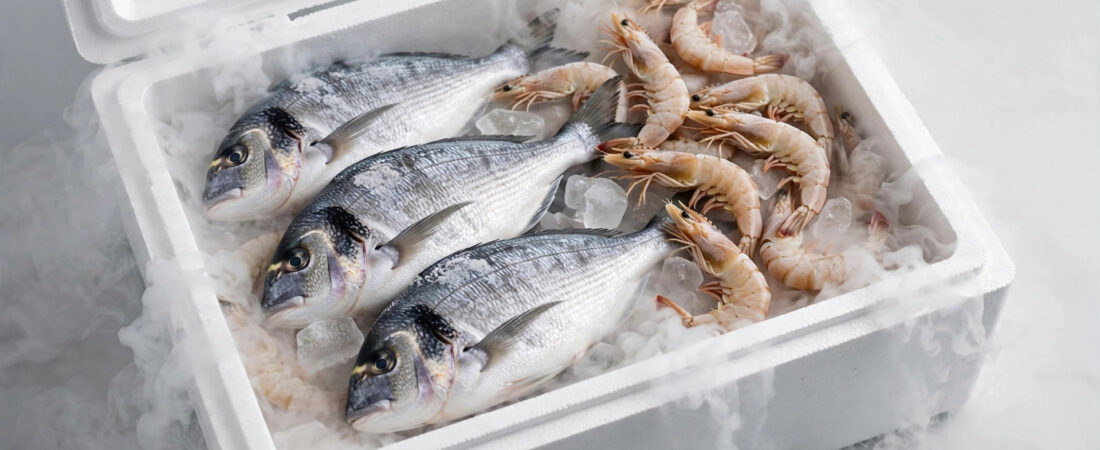
Karachi’s coastline feeds one of Pakistan’s oldest export industries. Every week, refrigerated trucks leave Korangi, Ibrahim Hyderi and the fish harbour carrying shrimp, squid, cuttlefish and other seafood bound for the Middle East, East Asia and Europe. But landing an export order is only half the job — if the packing fails anywhere between the harbour and the buyer’s cold store, an entire container can be rejected. Export buyers judge the packing first: it protects the product, proves the cold chain was never broken, and meets the standards of ports and health authorities. This guide explains the packing standards Karachi exporters actually work to, and what a new exporter needs to get right.
Why Packing Decides Whether Your Shipment Sells
Seafood is one of the most perishable exports there is. A shrimp that thaws and refreezes loses texture, develops a dull colour, and carries a bacterial risk that no buyer will accept. That is why export contracts almost always specify the packing method, the temperature at arrival, and often the packaging materials themselves. Your buyer in Dubai or Guangzhou is not checking how well you froze the product — they check the arrival temperature on the container logger and the condition of the packing. Get the packing right and the product arrives in saleable condition; get it wrong and the same product becomes a loss. For the domestic side of this, see our guide to packing prawns and seafood for Karachi delivery.
The Cold Chain Sequence: From Catch to Container
Export packing starts well before the box. Seafood should be blast-frozen to a core temperature of −18°C or below as soon as possible after processing, and it must stay there. The standard sequence is: blast freeze, glaze (a thin ice coating that protects against freezer burn), pack into export cartons, and load into a refrigerated container set to −20°C or colder. Each step has a time limit — cartons should not sit in an ambient staging area while the container is being prepared. Karachi exporters in the Korangi Creek industrial area commonly pre-cool their staging rooms or load directly from the cold store to the container. Any gap in this sequence shows up later as soft spots, dehydration, or an arrival temperature that breaks the contract.
Carton and Box Standards Export Buyers Expect
The workhorse of seafood export is the master carton: a corrugated fibreboard box, usually holding 10kg or 20kg net weight of product, lined with a food-grade poly bag. Key standards buyers check: the cartons must be new and clean, printed with the product name, size grade, net weight, production date, and your processing plant’s approval or registration number. Many buyers also require lot or batch coding for traceability. Inside the carton, retail packs (such as the 1kg IQF prawn packets) are packed snugly so they cannot shift during the sea journey; shifting crushes product and breaks seals. Use strapping or tape that survives cold and humidity — cheap tape that peels in a cold store is a classic failure. If you are setting up a packing operation, our guide on packaging that protects frozen products covers material choices in detail.
Temperature Proof: What Buyers and Ports Check
Buyers protect themselves with data loggers placed inside containers. These record the temperature for the whole voyage, and the printout decides whether the shipment is accepted. Most contracts require the product to arrive at −18°C or colder, and many specify that the temperature must never rise above a set limit, even briefly. Ports and health authorities add their own checks: export health certification, plant approval by Pakistan’s marine fisheries authorities, and compliance with the importing country’s food safety rules (the EU, for example, has its own approved-plant list). Packaging plays a direct role here — well-insulated, tightly packed cartons resist temperature spikes during transhipment and delays at ports, which are common on busy routes. A container delayed at Port Qasim in May heat needs packing that can take the strain.
Dry Ice and Gel: When Exporters Use Them
Full container loads rely on the reefer’s own refrigeration, not on dry ice. But dry ice and gel packs have real export uses: sample shipments sent by air to prospective buyers, small trial orders, and emergency top-ups when a container’s cooling is delayed before plug-in. For air freight, which is how most buyers receive their first sample, dry ice is the standard coolant — it keeps product at −78.5°C, needs no drainage, and is accepted by airlines under IATA rules (with proper labelling and ventilation in the packing). Karachi exporters regularly send 10–20kg sample boxes by air using dry ice inside insulated thermocol boxes; see our dry ice vs gel packs comparison for when each coolant fits. Just remember: air freight rules on dry ice quantities per package are strict, so check with your freight forwarder before packing.
Common Packing Mistakes That Lose Exporters Money
The expensive mistakes are almost always preventable. Under-filled cartons let product shift and crush. Over-filled cartons burst at the seams under stacking weight — containers stack cartons six or more high. Unlabelled or hand-written cartons fail buyer inspections and slow customs clearance. Packing product that is not yet at core temperature is the worst of all: warm product inside a sealed carton sweats, thaws its neighbours, and arrives as a frozen-then-thawed mass. And reusing old cartons with previous buyers’ labels still on them creates traceability chaos. Each of these mistakes has cost Karachi exporters real containers; the fix in every case is a written packing checklist, checked by a supervisor before the container doors close.
Frequently Asked Questions
What temperature must exported seafood arrive at?
Most contracts require −18°C or colder on arrival, with a data logger proving the temperature never broke the agreed limit during the voyage. Some buyers and markets set stricter limits.
Do I need a government-approved plant to export seafood from Karachi?
Yes. Your processing and packing plant must be approved by Pakistan’s fisheries authorities, and for markets like the EU it must appear on that market’s approved-establishment list. Buyers verify this before signing contracts.
Can I use dry ice for seafood export shipments?
For full container loads, no — the reefer container provides the cooling. Dry ice is the standard coolant for air-freight sample boxes and small trial orders, packed to airline (IATA) rules with proper ventilation and labelling.
Why do buyers reject seafood at arrival?
The most common reasons are a broken temperature record on the logger, poor carton condition or labelling, signs of thawing and refreezing, and missing or incorrect documentation. Almost all of these trace back to packing and cold chain discipline.
Need packing supplies for seafood or frozen exports? Message us on WhatsApp for thermocol boxes, dry ice for sample shipments, and packaging materials delivered across Karachi. Browse the full range on our shop page.