
Karachi’s home baking scene has exploded — customised birthday cakes, wedding tiers, and dessert tables ordered on Instagram and delivered across the city. But Karachi’s heat is the enemy of every cake maker. Buttercream softens above 25°C, fondant sweats and goes sticky, whipped cream collapses, and a two-hour delivery through Clifton traffic in May can turn a masterpiece into a leaning, melted mess. Delivering a cake in Karachi is not just transport; it is temperature management. This guide covers exactly how to keep cakes cool and intact from your kitchen to the customer’s door.
Know Your Cake’s Weak Points
Different cakes fail in different ways. Buttercream and cream-cheese frostings start to soften around 25–28°C and slump above 32°C — ordinary in Karachi for most of the year. Whipped cream and fresh-cream cakes are the most fragile: they need to stay under 5°C or they collapse within an hour. Fondant handles heat slightly better but sweats in humidity, which Karachi has in abundance, and condensation then streaks colours and dissolves sugar decorations. Chocolate ganache and mirror glaze hold up reasonably well but still lose their shine and shape in a hot car. The rule is simple: match the cooling to the cake. A fresh-cream cake in summer needs active cooling; a fondant cake in winter may survive with insulation alone. If you deliver regularly, keep a thermometer in your delivery box — guessing is how cakes get ruined.
The Insulated Box Method: Your Daily Workhorse
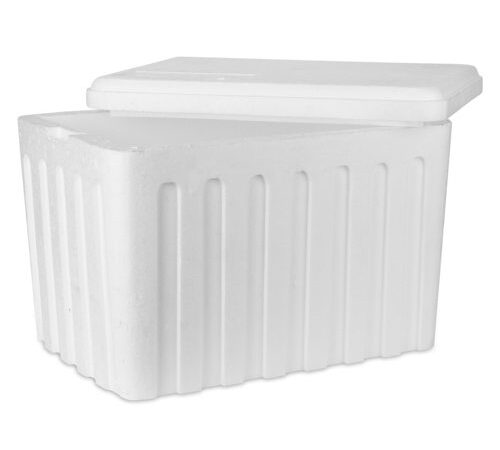
For most Karachi cake deliveries, a thick thermocol box is the best tool you own. Place the cake, on its board, in a sturdy cake box first, then set that inside the thermocol box — the double layer stops bumps and slows heat transfer. Add coolant packs around (not touching) the cake box: gel packs work well for shorter trips, while dry ice is the stronger option for long deliveries or the hottest months, placed in a separate compartment or wrapped so it never touches the cake directly. Direct contact with dry ice can freeze decorations and make condensation worse, so keep a layer of cardboard or a towel between the coolant and the cake. A good 5kg-capacity thermocol box, used this way, keeps a cake safe for two to three hours even in summer. Our thermocol box guide compares the 3kg and 5kg sizes most bakers use.
Dry Ice for Cake Delivery: When and How
Dry ice is the secret weapon of Karachi’s professional cake deliverers, but it needs handling rules. Use small quantities — 1 to 2kg is plenty for a standard cake box — and never place it directly against the cake or its box: the −78.5°C surface freezes anything it touches and the cold gas it releases can condense moisture onto decorations. Wrap the dry ice in paper or cloth, set it at the edges or bottom of the thermocol box, and leave the lid resting on top rather than sealed airtight so the gas can escape. Never carry a cake box with dry ice in a sealed car cabin with the windows up — ventilate the car. And plan the timing: buy the dry ice for the same day, since it loses roughly 10% per day even in a good box; our guide to how long dry ice lasts helps you buy the right amount. For a full rundown of handling rules, read our dry ice safety rules.
Packing for the Ride: Stopping Slides and Topples
Temperature is only half the battle — Karachi’s roads do the rest. Speed breakers, sudden braking and potholes shift cakes inside their boxes. Prevent this: tape the cake box to the thermocol box base or wedge it so it cannot slide, use a non-slip mat under the cake board, and for tiered cakes always use internal dowels and a centre support — a dowelled cake survives a speed breaker; an undowelled one does not. Carry the box flat on the car floor or boot floor, never on a seat where it can tilt. If you use a rider on a bike, only short distances with the box strapped flat, and avoid it entirely for wedding tiers or in peak heat. For multi-tier wedding cakes, consider delivering the tiers separately and assembling on site — it is the professional standard for a reason.
Timing and Routing: Beat the Heat
Smart bakers schedule around the heat. Deliver in the morning or after sunset where possible; a cake delivered at 10am in March faces half the thermal stress of one delivered at 2pm in June. Confirm the customer’s address and have them ready to receive — a cake sitting in a thermocol box on a doorstep for 40 minutes is a cake at risk. Call 15 minutes before arrival. In summer, plan your route to minimise time in traffic: the DHA-to-Gulshan run at 5pm is the worst possible slot. And always carry a backup: extra gel packs, a damp cloth, and a small offset spatula for emergency touch-ups at the door. Small fixes on the spot save the review; a melted cake delivered silently loses the customer.
Frequently Asked Questions
Can I use dry ice to deliver a cake in Karachi?
Yes — it is one of the best coolants for summer cake deliveries. Use 1–2kg wrapped in cloth or paper, placed around (not touching) the cake box inside a ventilated thermocol box. Never let it touch the cake directly or seal the box airtight.
How do I stop a cake from melting during a long delivery?
Use a thick thermocol box with coolant packs or dry ice, deliver in the morning or evening to avoid peak heat, minimise delivery time, and make sure the customer is ready to receive the cake immediately on arrival.
What size thermocol box do home bakers need?
A 5kg-capacity box suits most standard celebration cakes and gives room for coolant packs around the cake box. Taller wedding tiers need larger boxes or separate delivery of tiers; see our size and price guide.
Is it safe to keep a cake in the fridge with dry ice?
No — never put dry ice in a closed fridge or freezer with the cake. The extreme cold can freeze the cake solid and damage the appliance, and the gas needs ventilation. Keep the dry ice only in the ventilated delivery box.
Delivering cakes across Karachi? Message us on WhatsApp for same-day dry ice, gel packs, and thermocol boxes in baker-friendly sizes. Browse everything on our shop page.