
Karachi’s bakeries do not stop at their own counter. A cake ordered in Clifton may be eaten in Bahria Town, a box of croissants baked in Gulshan may be delivered to a corporate office in Korangi, and a tray of brownies may ride a bike through 38°C afternoon traffic. Between the oven and the customer’s table, heat, humidity, and load-shedding all get a vote — and the bakery’s reputation is decided by what arrives, not by what left the kitchen.
Preventing spoilage in bakery deliveries is not about buying a bigger freezer. It is about controlling temperature and moisture for the few hours a delivery actually takes, with packaging that works even when the power does not.
1. Know What Spoils First — and Why
Most bakery products fail in one of three ways. Cream, custard, and cheese fillings spoil when they sit above 4°C for more than a couple of hours — bacteria multiply fast in Karachi’s heat. Buttercream and chocolate decorations soften, slide, or bloom above 30°C. And breads and pastries go stale through moisture loss, or turn soggy when condensation forms inside a sealed bag.
Each problem needs a different answer. A dry ice pack solves the temperature problem but will not fix a soggy crust; a sealed bag stops moisture loss but traps condensation. Good bakery delivery packaging handles both at once.
2. Use Dry Ice for Cream, Custard, and Chocolate
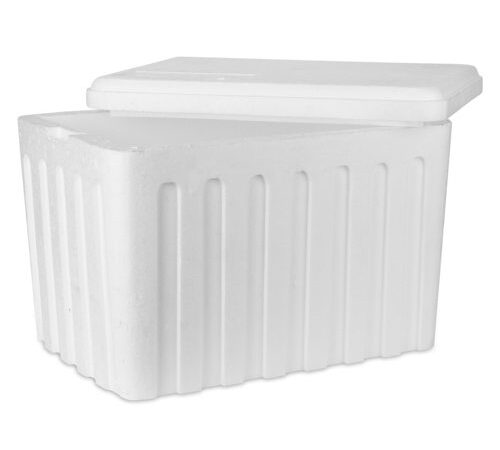
Any bakery item with a cream or custard filling, a chocolate topping, or a cheese layer is a cold-chain product, even if the customer thinks of it as a cake. For deliveries longer than an hour in Karachi’s heat, a thermocol box with dry ice is the simplest reliable answer.
Pack the cake or pastry box inside a thermocol box, and place the dry ice around it — never directly on top of the product. A layer of cardboard or a folded towel between the dry ice and the cake stops frost damage, which can make icing crack or buttercream go grainy. A 2 kg pack of dry ice in a 3 kg thermocol box keeps a cake safe for three to four hours, which covers most cross-city deliveries. Our guide to thermocol box sizes in Karachi shows which box fits a standard cake box, and our dry ice quantity guide helps you size the pack.
3. Keep Crusts Crisp: Ventilation Matters
Dry ice and cold boxes create a new problem if you are not careful: condensation. Warm, humid Karachi air meeting a cold box wall turns into water droplets, and those droplets land on pastry. The fix is simple — never seal a warm product into a cold box.
Let baked goods cool fully to room temperature before boxing, and give the box a small vent: a corner folded open, or a few small holes in the lid. For croissants, puff pastry, and bread, wrap the product in paper rather than plastic — paper absorbs a little moisture and keeps the crust crisp, while plastic traps it and turns everything soft.
4. Time the Bake, Not Just the Delivery
The strongest lever a bakery has is its production schedule. A cake baked at 6 am and delivered at 2 pm has already spent eight hours fighting the heat before the rider picks it up. Baking in smaller batches, closer to the delivery window, cuts the total exposure time in half.
For regular delivery routes, batch production around the rider’s schedule: morning orders baked before 9 am, afternoon orders baked after 12 pm. Where that is not possible, store finished goods in a chiller or a dry-ice-lined thermocol box at the bakery, not on a warm counter.
5. Protect the Box on the Bike
Most Karachi bakery deliveries travel by bike, and a cake box on a bike faces vibration, wind, and direct sun. A sturdy thermocol box does three jobs at once: it insulates against the heat, cushions the product against bumps, and shields it from sunlight.
Strap the box flat and level, never tilted, and keep it out of direct sun — even a cloth cover helps. Tell riders not to stack boxes, and not to open the box at every stop. Every opening lets warm air in and cold air out.
6. Load-Shedding: Plan for the Power Cut, Not the Fridge
Karachi’s load-shedding is the bakery’s quietest enemy. A freezer that loses power for two hours on a summer afternoon is warming up while the baker assumes it is fine. Keep a supply of dry ice at the bakery as backup coolant: a 5 kg pack in a closed thermocol box keeps a small chiller or a batch of cream cakes safe through a two- to three-hour outage.
Our guide to how Karachi restaurants survive load-shedding with dry ice covers the same technique in detail.
A Simple Bakery Delivery Checklist
Cool baked goods fully before boxing. Use paper, not plastic, for crusts. Pack cream, custard, and chocolate items in a thermocol box with dry ice, with cardboard between the dry ice and the product. Bake as close to the delivery window as you can. Strap boxes flat and shaded on the bike. Keep dry ice at the bakery as load-shedding backup.
Order Providers delivers dry ice and thermocol boxes across Karachi the same day, including to bakeries in Clifton, Gulshan, DHA, and Saddar. Message us on WhatsApp for the right quantity for your daily routes, or browse dry ice and packaging in our shop.
Frequently Asked Questions
How much dry ice do I need for a cake delivery?
For a single cake in a 3 kg thermocol box, 2 kg of dry ice is enough for a three- to four-hour delivery window in Karachi’s heat. Larger orders or multi-drop routes need 5 kg, split across boxes.
Will dry ice freeze or damage a cake?
Not if it is packed correctly. Never place dry ice directly against the cake or its icing — keep a layer of cardboard or a towel between them, and the dry ice will hold the box cool without freezing the product.
Can I use dry ice for bread and croissants?
Yes, but carefully. Bread and pastry need cold, not freezing, so use a smaller dry ice pack and ventilate the box so condensation does not make the crust soggy. Paper wrapping helps keep crusts crisp.
How do I keep bakery deliveries safe during load-shedding?
Keep dry ice at the bakery as backup coolant. A 5 kg pack in a closed thermocol box keeps cream cakes and fillings safe through a two- to three-hour outage, and it is far cheaper than losing a batch of stock.