
Insulin that gets too warm stops working properly. A vaccine that spends a few hours above 8°C may be useless by the time it reaches a patient. For pharmacies across Karachi, keeping temperature-sensitive medicines cold is not a nice extra — it is the difference between medicine that heals and medicine that does nothing.
Karachi makes this hard. Summer temperatures cross 40°C, load-shedding cuts power to fridges for hours, and deliveries travel through traffic on bikes. This guide covers how pharmacies store and move insulin and other temperature-sensitive medicines safely, using dry ice and simple cold-chain habits that work even when the power does not.
1. Know the Temperature Your Medicines Need
Most temperature-sensitive medicines fall into two groups. Insulin, many vaccines, and some biologics need refrigeration at 2°C to 8°C — cold, but never frozen. Freezing insulin destroys it just as surely as heat does. A smaller group of medicines needs deep-freeze storage below -20°C, and those are the ones dry ice handles directly.
The first step for any pharmacy is a written list: which medicines need refrigeration, what temperature range each one needs, and what happens if that range is broken. Without that list, staff guess — and guessing is how stock is lost. Check the label and the manufacturer’s storage instructions for every product, and keep a thermometer or temperature logger in every medicine fridge.
2. Use Dry Ice as a Backup, Not a Direct Freezer
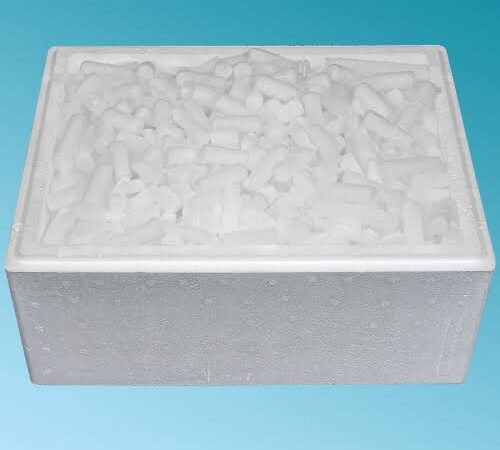
Dry ice sits at around -78.5°C, far colder than the 2°C to 8°C range insulin needs. That makes it a powerful backup coolant, but it must never touch insulin or vaccines directly. The right method is to place the dry ice in a separate, ventilated compartment of a thermocol box, with the medicines in their own insulated section — close enough to stay cold, far enough never to freeze.
For a pharmacy fridge during load-shedding, a practical setup is a 5 kg pack of dry ice in a 5 kg thermocol box holding the most sensitive stock, with a thermometer inside so staff can check the temperature without opening the box. Our guide to how much dry ice you need helps you size the pack.
3. Keep the Cold Chain Alive During Load-Shedding
A medicine fridge that loses power for two hours in a Karachi summer is warming up from the moment the power goes. The damage is invisible — the insulin looks exactly the same, but its potency may be gone. Three habits protect your stock.
First, keep the fridge door closed during an outage. Every opening lets warm air in and can raise the temperature by several degrees. Second, keep frozen gel packs or a dry ice reserve in the freezer compartment, so the fridge has thermal mass that holds the cold for longer. Third, keep a small supply of dry ice on hand at the pharmacy — a 5 kg pack in a closed thermocol box can hold critical stock at safe temperature for hours while the power is out.
4. Delivering Medicines Safely Across Karachi
Home delivery of insulin and other cold-chain medicines is growing fast in Karachi, and the delivery ride is the weakest link. A medicine that left the pharmacy fridge at 4°C can reach 25°C in a rider’s bag within an hour on a hot afternoon.
Pack deliveries in a small thermocol box with a frozen gel pack or a small piece of dry ice in a separate compartment — never in direct contact with the medicine. Include a simple instruction card for the patient: keep refrigerated at 2°C to 8°C, do not freeze. For longer cross-city deliveries, a 2 kg pack of dry ice in a 3 kg thermocol box covers a three- to four-hour window. Our thermocol box size guide shows which box fits a standard medicine parcel.
5. Train Staff and Check Temperatures Daily
Equipment alone does not protect medicines — people do. Every member of staff who handles refrigerated stock should know three things: the correct temperature range, what to do when the power goes out, and never to freeze insulin or vaccines.
Make temperature checks part of the daily routine: record the fridge temperature morning and evening, and log it in a notebook or a simple sheet. If a reading is outside 2°C to 8°C, act on it immediately — move the stock to the backup cool box and check the fridge. A temperature log also protects the pharmacy: it proves to suppliers and inspectors that the cold chain was maintained.
6. Stock Smart: Order Little and Often
Holding large quantities of refrigerated medicine ties up money and increases the loss when a fridge fails. Ordering smaller quantities more often reduces the amount of stock at risk at any one time, and it means fresher stock with longer shelf life remaining.
For pharmacies that order dry ice regularly, a standing arrangement works well: a small daily or every-other-day delivery of 2 to 5 kg, timed for the morning, so backup coolant is always on hand. Order Providers delivers dry ice across Karachi the same day, including to pharmacies in Saddar, Clifton, Gulshan, and DHA. Message us on WhatsApp to set up a regular supply, or browse dry ice and packaging in our shop.
Frequently Asked Questions
Can dry ice be used to store insulin?
Yes, as a backup coolant — but never in direct contact. Dry ice is -78.5°C and will freeze and destroy insulin. Keep the dry ice in a separate compartment of a thermocol box, with the insulin in its own insulated section, and use a thermometer to confirm the temperature stays between 2°C and 8°C.
How long can insulin stay out of the fridge in Karachi’s heat?
Unopened insulin must stay refrigerated at 2°C to 8°C. Once opened, most insulin can be kept at room temperature for up to 28 days, but room temperature in a Karachi summer can exceed the safe limit — keep opened insulin in the coolest part of the home and never leave it in a car or in direct sun.
What should a pharmacy do when the power goes out?
Keep the fridge door closed, move the most sensitive stock to a thermocol box with dry ice or frozen gel packs, and log the temperature. A 5 kg pack of dry ice can hold critical medicines safe for hours during an outage.
How should temperature-sensitive medicines be delivered to patients?
Pack them in a small thermocol box with a gel pack or a small piece of dry ice in a separate compartment, never touching the medicine. Include a storage instruction card, and deliver as quickly as possible — ideally within two hours.