
Frozen parathas and chapatis are one of Karachi’s quiet success stories. What started as a home kitchen side business is now a serious trade — suppliers deliver thousands of pieces a week to supermarkets, canteens, and home delivery customers from Clifton to Malir. The product itself is simple. The hard part is packaging: a paratha that arrives stuck together, freezer-burned, or thawed and refrozen is a lost customer. This guide covers the packaging that keeps frozen parathas and chapatis fresh from your kitchen to the buyer’s freezer.
1. Freeze Flat and Fast — Before You Pack Anything
Packaging cannot fix a bad freeze. Parathas and chapatis should be frozen flat, in a single layer, as soon as they cool — ideally within an hour of cooking. Slow freezing creates large ice crystals that tear the dough and leave a soggy texture when cooked. A home freezer set to -18°C or colder, with pieces laid flat on trays before bagging, gives a far better result than piling warm parathas into a bag and hoping for the best.
Never refreeze a thawed paratha. Once the dough has thawed, refreezing damages the texture and raises food safety risks. That is why your packaging and your delivery cold chain have to work together: the product must stay frozen from the moment it leaves your freezer until it reaches the customer’s.
2. Separate Every Piece — The Sticking Problem
The most common complaint about frozen parathas is pieces stuck together in the bag. The fix is simple and cheap: a sheet of butter paper or food-grade plastic between every piece. It costs almost nothing per pack and it is the difference between a customer who reorders and one who does not.
Stack the separated pieces in neat piles of five or ten, then slide the stack into a food-grade poly bag. Squeeze out as much air as possible before sealing — trapped air is what causes freezer burn, the dry white patches that ruin flavour and texture. A simple heat sealer pays for itself within weeks for any supplier packing more than a few hundred pieces a day.
3. The Right Outer Packaging for Delivery
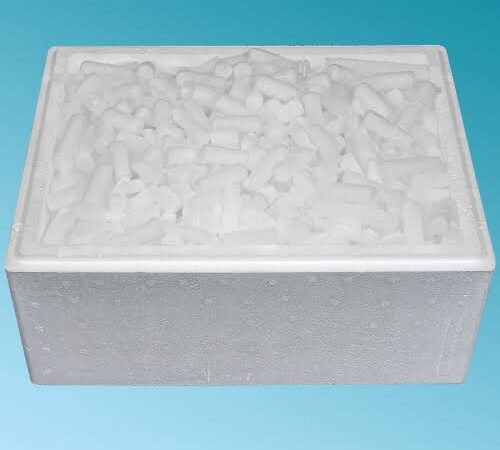
A sealed poly bag is not enough on its own for a Karachi delivery. On a summer afternoon, a bag in a rider’s delivery box can thaw in under an hour. The outer layer matters: a thermocol box keeps the product frozen for hours, and a small amount of dry ice inside holds it frozen for a full delivery route.
For home delivery, a 3 kg thermocol box with 1 kg of dry ice keeps a dozen packs frozen for four to five hours — more than enough for a cross-city route. For wholesale drops to supermarkets, a 5 kg box with 2 kg of dry ice covers a bigger load. Our guide to thermocol box sizes and prices in Karachi helps you pick the right box for the order size, and our dry ice quantity guide has the exact figures per box.
4. Labelling That Builds Trust
A plain, unlabelled bag looks like a home experiment; a labelled pack looks like a brand. At minimum, every pack should carry the product name, the piece count, the packing date, and a use-by date. Frozen parathas keep well for two to three months at -18°C, but customers should know when the pack was made.
Add a cooking instruction in Urdu and English — “tawa par halki aanch par sekain” alongside the English — because many buyers are first-time users. A phone number or WhatsApp contact on the label turns every pack into a reorder channel. And if you supply supermarkets, a simple printed label with your brand name is what gets your product stocked again instead of replaced by the next supplier.
5. Keeping the Cold Chain on the Delivery Route
Karachi’s traffic is the enemy of frozen food. A route that takes two hours in the morning can take four at midday, and a thawed paratha is a spoiled paratha. Plan deliveries for the morning when the temperature is lower, load the thermocol boxes last so they spend the least time in a warm vehicle, and never open a box at a stop unless that stop’s order is being unloaded.
For suppliers running daily routes, a standing weekly dry ice order keeps the cost down and the supply reliable — no last-minute scrambling before the morning dispatch. If a customer’s freezer is off because of load-shedding when you arrive, the dry ice in your box buys you time: the product stays frozen while they sort out the power. Our guide to frozen food during power cuts explains how long that window lasts.
The Packing Checklist
Freeze flat and fast. Separate every piece with butter paper. Squeeze the air out and heat-seal the bag. Label with the date, piece count, and cooking instructions. Deliver in a thermocol box with dry ice, in the morning, on a planned route. That is the whole system — and it keeps your parathas as fresh as the day they were made.
Order Providers supplies dry ice and thermocol boxes to food businesses across Karachi, with same-day delivery. Message us on WhatsApp for a regular weekly supply for your delivery route, or browse dry ice and packaging in our shop.
Frequently Asked Questions
How long do frozen parathas last in a home freezer?
Two to three months at -18°C or colder, if they were frozen flat, separated with butter paper, and sealed with the air squeezed out. After that they are still safe but the texture and flavour start to decline.
How do I stop frozen parathas from sticking together?
Place a sheet of butter paper or food-grade plastic between every piece before stacking, and freeze the pieces flat before bagging. Never bag warm parathas — the steam is what glues them together.
How much dry ice do I need to deliver frozen parathas in Karachi?
For a 3 kg thermocol box on a home delivery route, 1 kg of dry ice keeps the packs frozen for four to five hours. For a 5 kg wholesale box, use 2 kg. Order in the morning so it arrives fresh for the day’s dispatch.
Can I deliver frozen parathas without dry ice?
For very short trips — under an hour in a cool morning — a pre-chilled thermocol box alone can work. In Karachi’s summer heat, or on any route longer than an hour, dry ice is the safe choice: without it the product can thaw in transit and must not be refrozen.