
Ramadan changes the rhythm of every food business in Karachi. Orders that used to arrive all day now pile up in a single window: iftar boxes that must be packed in the afternoon, loaded by 4 or 5 pm, and opened at sunset — still cold, still fresh, still safe to eat. The problem is that the afternoon is the hottest part of the day, the roads are at their worst, and a frozen samosa or kebab that spends three hours in a warm van arrives thawed, soggy, and — for a paying customer breaking their fast — unacceptable. Keeping iftar boxes frozen until sunset is a packing problem, and packing problems have reliable answers.
Why Iftar Boxes Are Harder Than Normal Deliveries
A normal frozen delivery goes from freezer to customer in an hour or two. An iftar box has a much longer journey. It is packed in the early afternoon, it may wait in a dispatch area, it travels through peak pre-iftar traffic, and it often sits on a doorstep or a mosque collection table until maghrib. That is three to five hours outside a freezer, in temperatures that can still be above 30°C in late afternoon — and the inside of a closed delivery van in Karachi traffic is warmer still.
The second difficulty is the mix inside the box. A typical iftar box holds items that freeze differently: samosas and spring rolls, kebabs, parathas, fruit, and sometimes a dessert. A paratha that thaws and refreezes turns leathery, and a kebab that warms up and cools down again is a food-safety risk. Every item needs to stay below freezing, not just “cool”, for the whole journey.
The Packing That Actually Works
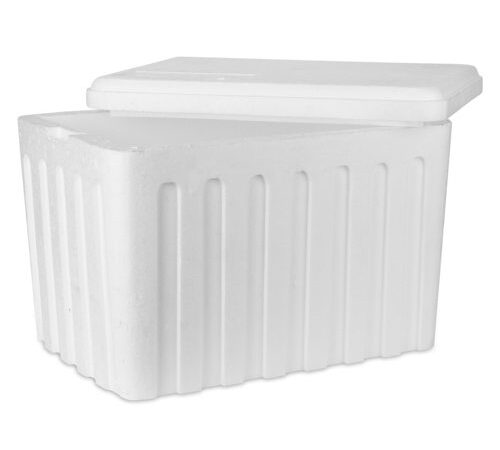
The foundation is an insulated thermocol box. A 5kg thermocol box is the right size for a standard family iftar box; a 3kg box suits a single-person box. The box does the slow work of keeping heat out, but on its own it only buys you an hour or two. The real cold comes from what you put inside it.
Dry ice is the strongest option for iftar deliveries. A 2kg pack of dry ice pellets inside a 5kg thermocol box will hold frozen items solid for four to six hours — comfortably past sunset — even in a warm van. Gel packs are a weaker alternative: they work for two to three hours and start losing the battle in the last hour before maghrib. Regular ice is the worst choice: it melts, it soaks the box, and it leaves the food wet. Our guide to dry ice vs gel packs vs regular ice compares the three options in detail, and our dry ice quantity guide shows how much you need for a box of any size.
Pack in this order: dry ice at the bottom of the box, a layer of cardboard or newspaper over it so it never touches the food directly, then the frozen items, packed tightly with no empty air gaps. Fill gaps with crumpled paper. Close the lid and tape it shut. Do not open the box to check on it: every opening lets in a rush of warm air.
Timing the Packing and the Route
Pack as late as you can. If iftar is at 6:30 pm and your rider leaves at 4:30 pm, pack the boxes at 4:00 pm, not at 1:00 pm. Every hour a packed box waits in a warm dispatch area is an hour of cold you will never get back. If you must pack early, keep the finished boxes in a freezer or a cold room until the rider arrives.
Plan the route backwards from maghrib. Deliver the farthest addresses first and the nearest ones last, so no box spends longer on the road than it has to. In Ramadan, Karachi traffic peaks between 5:00 and 6:30 pm; a route that takes 40 minutes on a normal day can take 90 minutes then. Build that into your schedule, and tell customers the delivery window honestly.
What to Tell the Customer
Most iftar-box complaints are not about the food — they are about surprise. A customer who opens a box and finds a small dry ice pack inside, with no explanation, may panic. Include a short printed note in every box: “This box contains dry ice to keep your food frozen. Do not touch the dry ice with bare hands. Let it melt away in a ventilated room.”
Also tell customers what to do if they are not eating immediately. Frozen samosas and kebabs should go straight into the freezer if the family is eating after taraweeh, not sit on the kitchen counter. And never refreeze an item that has fully thawed — cook it, or throw it away.
Scaling Up: Mosques, Offices and Bulk Orders
For mosque distributions, add one extra step: a shaded waiting area. Boxes left in direct sun on a mosque courtyard lose cold twice as fast as boxes kept in the shade. A simple canopy or a spot under the building overhang makes a real difference.
Frequently Asked Questions
How much dry ice do I need in one iftar box?
For a standard 5kg thermocol box, 2kg of dry ice pellets will keep frozen items solid for four to six hours. A smaller 3kg box needs about 1kg. Add an extra kilo if the delivery route is longer than two hours or the van has no air conditioning.
Can I use gel packs instead of dry ice for iftar boxes?
You can, but only for short deliveries under three hours. Gel packs warm up steadily and may not hold frozen items below freezing in the last hour before maghrib. Dry ice stays at -78°C until it is gone, so it protects the food for the whole journey.
What if the customer opens the box early and the food is still frozen solid?
That is the result you want. Tell customers to leave frozen items in the box until they are ready to cook, or move them to the freezer. A box that arrives still frozen is proof the packing worked — it is not a problem to fix.
Planning iftar box deliveries this Ramadan? Message us on WhatsApp at 0310 2395910 for dry ice packs and thermocol boxes — same-day delivery across Karachi, with bulk pricing for mosque and office orders. Browse the full range in our shop.