
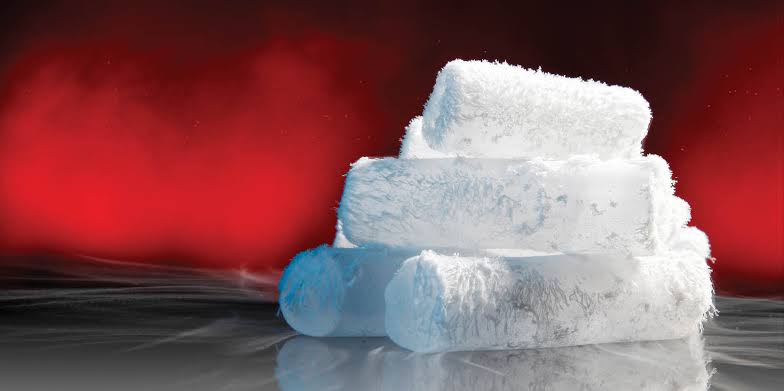
Dry ice looks harmless — a block of white that smokes on camera — but at −78.5°C it is cold enough to burn skin on contact, and it turns into carbon dioxide gas as it melts. Handle it correctly and it is the safest, cleanest way to keep frozen goods frozen. Handle it carelessly and you are looking at burns, damaged vehicles, or worse.
Whether you run a food business in Karachi or are packing your first box at home, these ten rules will keep you and your products safe.
1. Never Touch Dry Ice With Bare Hands
This is the number-one rule and the most broken one. Dry ice at −78.5°C causes cryogenic burns in seconds — they feel and damage like heat burns. Always use thick insulated gloves, a folded towel, or tongs. Thin latex or cotton gloves are not enough; the cold goes straight through them.
2. Keep the Room Ventilated
Dry ice does not melt into liquid — it sublimates directly into carbon dioxide (CO₂) gas. In a small closed room, a parked car, or a walk-in cold room with no airflow, that gas displaces oxygen. Never store or work with large amounts of dry ice in a sealed space. Open a window or door, and never sleep in a room where dry ice is stored.
3. Never Store Dry Ice in an Airtight Container
As dry ice turns to gas it expands to roughly 800 times its original volume. A sealed plastic bottle, airtight cooler, or vacuum flask will pressurise and can burst — sometimes violently. Use a cooler or thermocol box that is closed but not airtight: the lid sits on top and lets gas escape slowly.
4. Never Put Dry Ice in a Household Freezer
Your chest freezer runs at around −18°C; dry ice is at −78.5°C. That extreme cold can crack plastic liners, damage the thermostat, and even break the compressor. Store dry ice in an insulated cooler or EPS thermocol box at room temperature instead. See our guide on choosing the right thermocol box for storage sizes that suit home and business use.
5. Transport It With Airflow, Never in a Sealed Car Boot
Karachi’s heat means delivery cars get very hot, very fast — which is exactly why dry ice sublimates faster in transit. Always transport dry ice with ventilation: keep a window cracked or use the car’s ventilation. Never lock a large quantity in a sealed car boot for hours; gas buildup is the risk, not just faster melting.
6. Keep It Away from Children and Pets
The smoke effect makes dry ice fascinating — which is exactly why kids want to touch it. Burns happen in seconds and children rarely report the cold until damage is done. Store dry ice where children and pets cannot reach it, and brief anyone in your kitchen or storeroom before they encounter it for the first time.
7. Let the Gas Escape When Packing Boxes
When you pack frozen food for delivery, seal the thermocol box with tape but do not wrap it airtight in shrink film or plastic sheeting with no escape path. Pressure needs somewhere to go. Our frozen food shipping guide shows the correct packing order — dry ice top and bottom, taped shut, but never hermetically sealed.
8. Buy the Right Quantity — More Is Not Safer
Ordering extra “just in case” is natural, but a 20kg block sitting unused in a storeroom sublimates away over a couple of days and fills a small room with CO₂. Plan your quantity for the actual job. Our dry ice quantity guide walks through the maths — roughly 2.5–5kg per 24 hours of transit in a good box — so you order what you need and nothing sits around.
9. Dispose of Leftovers Safely
When the job is done, the safest way to dispose of dry ice is to let it sublimate in a well-ventilated area — an open balcony, a courtyard, or a ventilated room. Never dump it in the sink (the extreme cold can crack porcelain and damage pipes), never leave it where people can step on it, and never throw it in ordinary rubbish where a handler could be burned.
10. Keep a Simple First-Aid Response Ready
If someone touches dry ice with bare skin: remove them from the cold immediately, do not rub the area, run lukewarm (not hot) water over it, and cover loosely with a clean bandage. For anything worse than a small red mark — blistering, numbness that does not fade, or a large area — see a doctor the same day. Brief your staff once; the whole talk takes two minutes and prevents the most common dry-ice injuries we hear about.
Safety Is Part of the Service
At Order Providers, every dry ice delivery in Karachi comes packed in proper insulated packaging, and our riders hand over handling guidance with the parcel. Browse our dry ice and packaging range, or message us on WhatsApp with your requirement and we will advise on safe quantities for your route.
Frequently Asked Questions
Is dry ice safe to use with food?
Yes. Dry ice is frozen carbon dioxide and does not melt into liquid, so food never sits in water. Keep a paper barrier between the dry ice and the products, and handle the dry ice itself with gloves.
How long can I store dry ice at home?
In a good insulated cooler or thick thermocol box kept out of direct sun, dry ice typically lasts 24–48 hours before sublimating away. The hotter the Karachi day, the faster it goes. Order for the day you need it.
Can dry ice explode?
Dry ice itself does not explode — but sealing it in an airtight container lets pressure build until the container bursts. The rule is simple: insulated yes, airtight no.
What do I do if dry ice touches my skin?
Move away from the cold, don’t rub, rinse with lukewarm water, and cover loosely. Seek medical help for blistering or lasting numbness.