
Karachi’s load-shedding is a fact of life for every household and food business. When the power cuts at noon in June and your freezer holds a week’s worth of frozen prawns, kebabs, or medicines, the only question that matters is: how long before it thaws? The answer depends on the freezer, the packaging, and what you do in the first ten minutes of the outage.
This guide gives realistic hold times for frozen food during a power cut, and the practical steps that stretch those hours as long as possible.
The Realistic Numbers
With no preparation at all, a full upright or chest freezer keeps food frozen for roughly 4 to 8 hours if the door stays closed. A half-empty freezer holds for less — 2 to 4 hours — because there is less frozen mass to keep things cold. A refrigerator-freezer combo does worst of all, since its insulation is thinner and the door seal is opened more often.
These are summer numbers. In Karachi’s July heat, with ambient temperatures above 38°C, expect the lower end of the range. In winter, the same freezer can hold frozen for 10 hours or more. The rule of thumb: a full freezer, door closed, in a room that is not directly in the sun, holds roughly twice as long as a half-empty one.
Why a Full Freezer Lasts Longer
Frozen food itself is the best coolant. Every frozen item is a block of cold that absorbs heat before the temperature around it rises. That is why a freezer packed tight survives an outage far better than one with three lonely packets rattling around. If your freezer is chronically half-empty, freeze bottles or bags of water to fill the dead space — they act as thermal mass and, once frozen, double as emergency cold packs.
The First 10 Minutes: What to Do When the Power Cuts
What you do right after the cut matters more than anything. Keep the freezer door shut — every opening lets warm air in and costs you frozen time. If the outage is clearly going to last (K-Electric’s schedule is usually known), act quickly: transfer the most valuable stock — seafood, dairy, meat — into thermocol boxes with dry ice while the freezer is still cold. This is the same technique restaurants use; our restaurant load-shedding guide covers the method in detail.
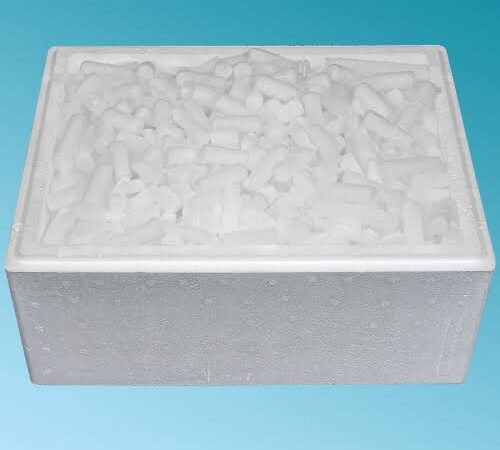
For households, the honest backup is simpler: one or two thermocol boxes and a standby supply of dry ice turn a 4-hour hold into a 12-to-24-hour hold. Keep a box on hand — it costs little and takes up little space. Our guide on storing dry ice safely at home explains how to keep a small reserve without risk.
Dry Ice: The Serious Backup
Dry ice changes the equation completely. At roughly -78.5°C, even 2 to 3 kg in a thermocol box keeps a full load of frozen food rock-solid for 12 to 24 hours — long enough to outlast any scheduled load-shedding block in Karachi, and most unscheduled ones. Businesses with freezers full of stock keep a standing arrangement with a supplier so dry ice arrives on short notice.
Use it correctly: wrap food in poly bags first so dry ice never touches food directly (it can cause freezer burn), place dry ice above the food since cold sinks, and never seal the box airtight — the gas needs a small escape path. Our dry ice safety rules cover handling in full.
How to Tell If Food Is Still Safe
After a long outage, the 40°F (4°C) rule is your guide. Food that stayed at or below that temperature is safe to refreeze. A simple trick: freeze a cup of water, place a coin on top of the ice, and leave it in the freezer. After an outage, if the coin is still on top, everything stayed frozen solid. If the coin sank into the ice, the food thawed partially — anything that stayed below 4°C is still usable, but it should be cooked rather than refrozen.
When in doubt, use your senses as a backup: off smells, slimy texture, or discolouration mean the food goes out. Seafood and minced meat are the most unforgiving — treat them with the most caution. For anything you are unsure about, cooking it the same day is safer than refreezing it.
Preparing Before Load-Shedding Season
The best time to prepare is before the outage, not during it. Keep freezers full (add frozen water bottles if needed). Keep a stack of thermocol boxes and a dry ice supplier’s number saved in your phone. Know your freezer’s weak points: an old door seal leaks cold constantly, and replacing a worn seal is cheap insurance. If your business depends on frozen inventory, a small UPS or generator dedicated to the freezer pays for itself the first time it saves a full stock load.
Also plan for the freezer’s worst enemy: repeated short outages. Three 2-hour cuts in one day, with the door opened each time, thaw more than one 6-hour cut with the door kept shut. During scheduled load-shedding days, treat the freezer as a vault — open it only once, take everything you need, and close it until power returns.
Order Providers delivers dry ice across Karachi the same day, including emergency orders during long outages. Message us on WhatsApp and we will quote the right quantity for your freezer or stock size. You can also browse dry ice and thermocol boxes in our shop.
Frequently Asked Questions
How long does a full freezer keep food frozen during a power cut?
Roughly 4 to 8 hours in Karachi’s summer if the door stays closed. A half-empty freezer holds for 2 to 4 hours. Transferring stock to thermocol boxes with dry ice extends that to 12–24 hours.
Should I keep opening the freezer to check the food?
No. Every opening costs you frozen time. Keep the door shut until the power returns. If the outage is long, move the most valuable stock into a thermocol box with dry ice instead.
Can I refreeze food that thawed during an outage?
Only if it stayed at or below 4°C. The coin-in-ice trick tells you whether it stayed frozen. When in doubt, cook the food the same day rather than refreezing it.
How much dry ice do I need as a backup for my freezer?
For emergency stock protection, 2 to 5 kg per thermocol box covers a typical household load. Businesses with commercial freezers should keep a larger standing arrangement. Our quantity guide helps you size it.