
Dry ice is one of the most useful things a Karachi home or business can keep on hand — it keeps food frozen during load-shedding, protects deliveries in summer heat, and creates spectacular fog for events. But it is also very different from regular ice: at −78.5°C it can burn skin on contact, and as it turns directly into gas it needs ventilation. Stored correctly, it is perfectly safe. Stored badly, it can damage a freezer, ruin food, or put people at risk. This guide covers exactly how to store dry ice safely, whether you have a 2kg pack at home or a 20kg box at work.
The Golden Rules of Dry Ice Storage
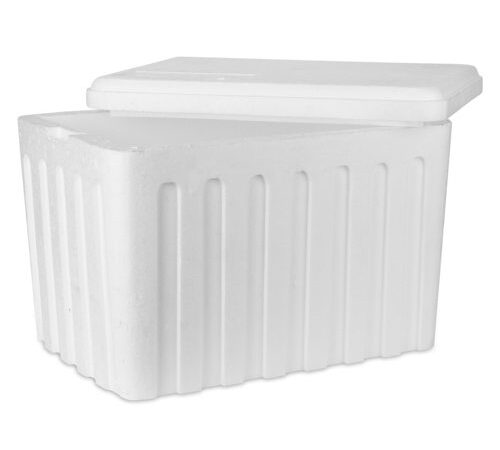
Four rules cover almost everything. First, always keep dry ice in an insulated container, such as a thermocol box, with the lid resting on top but not sealed airtight — the gas it releases must be able to escape, or pressure will build up. Second, keep it in a cool, well-ventilated place, never in a small sealed room. Third, never touch it with bare hands; insulated gloves or a thick towel are essential, and tongs help for small pieces. Fourth, keep it away from children and pets, and make sure everyone in the house or workplace knows what it is. These rules apply equally at home and at work; for the full list, read our dry ice safety rules.
Storing Dry Ice at Home
At home, a thermocol box is usually the best container you already have. Place the box in a ventilated area — a balcony with shade, a well-aired utility area, or a room with a window open — rather than a closed cupboard. Do not put dry ice in your kitchen freezer: a home freezer runs at around −18°C, far warmer than dry ice, so it cannot preserve it, and the extreme cold can strain the freezer’s thermostat and seals. If you are using dry ice to keep food cold during a power cut, pack the food and the dry ice together in the same insulated box, with the dry ice on top, since cold gas sinks. Open the box only when you need something, and close it again straight away — every opening in Karachi’s heat costs you usable hours. A 5kg pack used this way can protect a family’s frozen food for a day or more; our quantity guide helps you work out the right amount for your box size.
Storing Dry Ice at Work
Workplaces need a little more structure. Nominate one ventilated storage spot and label it clearly, so delivery staff and new employees know where dry ice goes and where it does not. Keep a pair of insulated gloves next to the box, not somewhere else in the building. If you receive regular deliveries, split the stock into two boxes: one for daily use and one kept sealed as reserve, so the reserve is not exposed to warm air every time someone takes a piece out. Restaurants and ice cream parlours should also plan for load-shedding: dry ice stored for backup cooling is only useful if staff know where it is and how to use it when the power goes. A short briefing for the team — gloves on, ventilated room, never sealed containers — takes five minutes and prevents the most common workplace accidents.
How Long Will It Last?
In a good insulated box, expect dry ice to lose roughly 10% of its weight per day, more in Karachi’s summer and less in winter. A 10kg block kept sealed in a thick thermocol box may last two to three days; the same amount in a thin box opened frequently may be gone in a day. Buying more than you need for the next two to three days is rarely good value. If you need dry ice regularly, order smaller amounts more often — see our shop page for pack sizes from 2kg upwards.
What Never to Do
Never store dry ice in a sealed or airtight container — a plastic tub with a snap-on lid, a sealed drum, or a glass bottle can burst as gas builds up. Never leave it in a car with the windows closed, or in a small room with no airflow. Never let children play with it unsupervised, and never put it directly into drinks for guests without warning them: a piece swallowed or held in the mouth can cause serious injury. And never dispose of leftover dry ice in a sink, toilet or dustbin — simply leave it in its ventilated box at room temperature and let it sublimate away safely.
Frequently Asked Questions
Can I keep dry ice in my home freezer?
No. A home freezer is far warmer than dry ice and cannot preserve it, and the extreme cold can damage the freezer. Keep it in an insulated thermocol box in a ventilated spot instead.
How long does 5kg of dry ice last at home?
In a good insulated box opened rarely, around one to two days in Karachi’s heat. In a thin box opened often, it may last less than a day.
Is it safe to keep dry ice in a bedroom?
Only in a well-ventilated room, and never in a small closed room overnight. Carbon dioxide builds up in unventilated spaces, so a ventilated utility area or balcony is a better choice.
What should I do with leftover dry ice?
Leave it in its ventilated box at room temperature and let it turn into gas naturally. Never seal it in a container, pour water on it in an enclosed space, or throw it in the bin.
Need dry ice delivered in Karachi? Message us on WhatsApp with the quantity you need and your area, and we will confirm same-day delivery. Browse pack sizes on our shop page.