
Eid-ul-Adha turns every Karachi household with a qurbani into a temporary cold-chain operator. A cow yields 80–120 kg of meat, a goat 12–18 kg — and it all arrives within hours, warm, in peak-season heat. The families that handle it well share one thing: a plan made before Eid day. This guide covers how to freeze qurbani meat properly, store it for weeks, and deliver shares to relatives without anything thawing on the way.
Step 1: Chill Before You Freeze
Fresh qurbani meat leaves the animal at around 37°C. Put a warm 10 kg lump straight into a freezer and three things happen: it takes far too long to freeze in the middle, it warms up everything already in the freezer, and the outer layer freezes while the centre stays in the danger zone where bacteria multiply.
The right sequence is chill, portion, then freeze. Spread the meat in a cool, shaded room for an hour or two so the surface heat escapes — but no longer, especially if the day is hot. Then portion it before it goes anywhere near a freezer.
Step 2: Portion Into 1–2 kg Packs
Portioning is the single highest-value step in qurbani meat handling. Small packs freeze faster, thaw faster, stack neatly in thermocol boxes, and make distribution easy — one pack per household instead of hacking a frozen lump apart.
1–2 kg is the sweet spot. Larger packs take 12+ hours to freeze solid in a home freezer, which ruins texture and risks spoilage. If you are separating meat by cut (raan, dasti, keema meat), portion each cut separately and label the bags with a marker: cut, weight, and date.
Use proper freezer bags or double-wrap in cling film plus a freezer bag. Squeeze the air out before sealing — air pockets cause freezer burn, the grey dried patches that ruin the taste of stored meat.
Step 3: Freeze Fast and Solid
A home freezer is not a blast chiller, so help it along. Do not load more than 3–4 kg of unfrozen meat at once if the freezer is already holding stock — stagger the load over several hours. Keep the freezer at −18°C or below, and leave space between packs so cold air circulates.
Once frozen, meat keeps well for 3–4 months at −18°C (keema slightly less, around 2–3 months). It will not stay at its best forever, so eat or distribute the oldest stock first.
The Freezer Is Full — Now What?
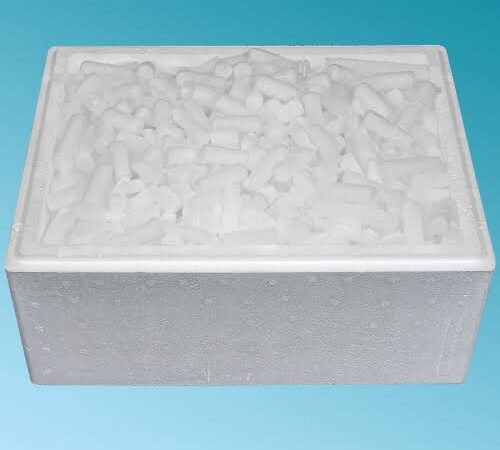
Every Eid, Karachi’s freezers overflow. The backup that works: a 5 kg thermocol box with 3–4 kg of dry ice pellets acts as an overflow freezer that holds meat solidly frozen for 24–36 hours. Keep it in the coolest, shadiest spot in the house — a north-facing room or an air-conditioned one — and open it as little as possible.
Put the dry ice above the meat, not under it (cold sinks). Never seal the box airtight — dry ice releases carbon dioxide gas as it sublimates, and a sealed box builds pressure. Fill gaps with crumpled newspaper so warm air has nowhere to sit. Our dry ice storage guide covers the full safety rules, including ventilation.
Delivering Shares to Relatives
Distributing qurbani meat to relatives, neighbours, and charity is where most spoilage happens — not in the freezer, but in the car. The typical failure: a stack of packs in a shopping bag, a two-hour route across Karachi in the afternoon, and meat that arrives half-thawed.
Pack each address separately. Put each household’s share in its own labelled thermocol box with its own dry ice. That way one long route does not expose everyone’s meat — you hand over sealed boxes instead of opening one big box at every stop.
Plan the route. Map the drop-offs before you leave, and do the longest, most distant leg first while the ice is at its strongest. Load the vehicle last, right before departure, not an hour before.
How much dry ice? For a standard 5 kg box carrying 4–5 kg of meat on a 4–6 hour Karachi route in summer, 2–3 kg of dry ice pellets is a safe baseline. Our quantity guide has the full table for longer routes.
Ordering Before Eid, Not On It
Dry ice suppliers in Karachi run at full capacity on Eid days. Same-day delivery that is easy in February can stretch to the next day when every household in the city is ordering at once. The winning move is to buy your thermocol boxes a week before Eid and confirm your dry ice delivery for the day before qurbani, so the ice is fresh and the boxes are ready when the meat arrives.
Message Order Providers on WhatsApp to reserve dry ice and thermocol boxes ahead of Eid — we deliver across Karachi with early-morning dispatch slots. Browse boxes and pellets anytime on our shop.
Frequently Asked Questions
How quickly must qurbani meat be chilled after slaughter?
Get it out of the heat and portioned within a few hours. Spread it in a cool, shaded place, then portion into 1–2 kg packs and freeze. Do not leave fresh meat sitting in warm conditions all day — the risk rises sharply with time and temperature.
How long does frozen qurbani meat last?
At −18°C or below, frozen red meat keeps well for 3–4 months; keema for 2–3 months. Portions frozen quickly in small packs retain the best texture. Always eat the oldest packs first.
Can I transport qurbani meat without a freezer?
Yes. Pack frozen portions in a thermocol box with dry ice above the meat, fill the gaps, and never seal the box airtight. A properly packed 5 kg box keeps meat frozen for a full day — enough for any Karachi delivery route.
How much dry ice do I need for a meat delivery route?
For a 5 kg box with 4–5 kg of meat on a 4–6 hour summer route, 2–3 kg of dry ice pellets is a solid baseline. Scale up for longer routes or hotter days, and pre-chill the box 15–20 minutes before loading.