
Cloud kitchens run on speed and consistency. There is no dining room, no walk-in display, and no second chance if an ingredient arrives thawed or spoiled. Frozen ingredients — marinated chicken, parathas, sauces, desserts, samosas — are the backbone of most cloud kitchen menus in Karachi, and keeping them frozen from delivery to cooking is what separates a kitchen that delivers on time from one that cancels orders.
This guide covers how cloud kitchens in Karachi store, handle, and order frozen ingredients so the cold chain never breaks.
Why Frozen Ingredient Storage Matters More in a Cloud Kitchen
A cloud kitchen has no front of house to absorb a delay. Every order comes through an app, and every late or cancelled order costs a rating. Frozen ingredients give you flexibility — you buy in bulk, cook to order, and waste less — but only if the stock stays at the right temperature.
Karachi adds its own complications. Summer temperatures cross 40°C, load-shedding is a daily reality in many areas, and delivery bikes sit in traffic in the heat. A bag of frozen chicken that leaves the supplier at -18°C can reach your kitchen soft if it travels in an uninsulated box. That is why the packaging and the transport matter as much as the ingredient itself.
The Cold Chain From Supplier to Kitchen
The cold chain is simple in principle: the ingredient must stay frozen from the supplier’s freezer to your kitchen’s freezer, with no warm gap in between. In practice, that means three things.
First, order from suppliers who pack frozen goods properly — in thermocol boxes with dry ice or gel packs, not loose in a plastic bag. Second, receive the delivery straight into your freezer, not onto a counter while you finish another task. Third, check the condition on arrival: frozen solid, no ice crystals inside the packaging, no soft spots. If anything has thawed, message the supplier the same day with a photo.
For a cloud kitchen ordering several times a week, a regular delivery slot helps. Order Providers delivers dry ice and thermocol boxes across Karachi the same day — see our guide to Karachi areas we deliver to for the full list of neighbourhoods covered.
Thermocol Boxes and Dry Ice for Ingredient Holds
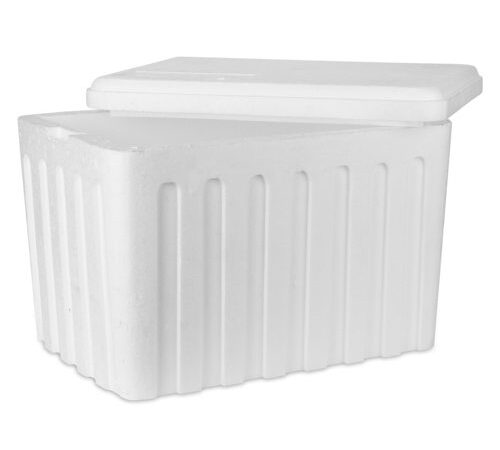
Most cloud kitchens do not have a large walk-in freezer. A chest freezer plus a few thermocol boxes covers most needs. Thermocol boxes are useful in three ways: they hold overflow stock on busy days, they keep ingredients cold during load-shedding, and they carry ingredients to a second kitchen or a pop-up stall.
The 3 kg and 5 kg thermocol boxes are the practical sizes for a cloud kitchen — big enough for a day’s worth of marinated meat or frozen parathas, small enough to stack in a corner. Our guide to thermocol box sizes and prices in Karachi explains which size fits which job.
Dry ice is the backup that keeps a freezer cold when the power goes out. Around 2 to 3 kg of dry ice pellets placed on the top shelf of a chest freezer keeps the temperature down for hours during load-shedding. For the full method, read how long dry ice keeps your freezer cold — it covers quantities for different freezer sizes.
Portioning and Labelling: The Daily Routine That Saves Money
Freezing ingredients in bulk is only half the job. The other half is portioning. A cloud kitchen that freezes a whole 10 kg bag of chicken and thaws it for one order wastes the rest. Portion into single-service packs — one pack per dish — and label each with the item name and the date it went into the freezer.
Frozen food keeps its quality for weeks when it stays frozen, but every thaw and refreeze shortens its life.
Keep a small stock sheet on the wall: item, quantity in the freezer, date ordered, supplier. When a stock line drops below a day’s usage, order the same day. Running out of a signature dish at dinner time is the most expensive mistake a cloud kitchen makes.
Load-Shedding Backup: A Plan, Not a Panic
Load-shedding in Karachi is predictable enough to plan for. Keep a standing order of dry ice during the hot months — 5 kg a week is enough for most small cloud kitchens — and keep two thermocol boxes ready. When the power cuts, move the most valuable stock into the boxes with dry ice and keep the freezer door shut.
A freezer that stays closed holds its temperature for several hours on its own — opening it to check every half hour is what kills it. Keep the door shut and check the temperature once when the power returns.
Ordering Supplies for Your Cloud Kitchen
Cloud kitchens order little and often, so a supplier that delivers the same day matters more than one with the lowest price. Dry ice prices at Order Providers are simple: 2 kg at Rs 1,450, 5 kg at Rs 2,950, 10 kg at Rs 5,950, 15 kg at Rs 10,750, and 20 kg at Rs 11,450, with bulk orders of 40 kg and above at Rs 400 per kg. Delivery charges within Karachi are Rs 250 to Rs 750 depending on distance.
Browse the full range on our shop — dry ice packs, thermocol boxes, and packaging materials — and message us on WhatsApp at 0320-3921038 for a quote. Cash on delivery and bank transfer are both accepted.
Frequently Asked Questions
How much dry ice does a cloud kitchen need per week?
Most small cloud kitchens use 5 to 10 kg a week — mainly as load-shedding backup for the freezer and for transporting ingredients between locations. Larger kitchens running multiple brands may need 20 kg or more.
Which thermocol box size suits a cloud kitchen?
The 3 kg box suits daily ingredient holds and small deliveries; the 5 kg box suits bulk stock and longer holds. Many kitchens keep both sizes on hand.
How long can frozen ingredients stay in a thermocol box?
With dry ice, a good thermocol box holds frozen ingredients for 24 hours or more. Without dry ice, expect a few hours in Karachi’s summer heat — always add dry ice for anything longer than a short trip.
What should I check when a frozen delivery arrives?
Check that the goods are frozen solid, with no soft spots or ice crystals inside the packaging, and that the box still has dry ice or cold packs in it. Report any problem to the supplier the same day with a photo.