
The lights go out in Karachi, and the first question in every home is the same: how long will the freezer hold? A full freezer is a quiet insurance policy, but only if you know its limits — and only if you have a backup plan for the outages that run longer. Dry ice is that backup plan. This guide explains how long dry ice keeps your freezer cold during load-shedding, and how to use it properly.
1. How Long Does a Freezer Hold Without Power?
A full, unopened freezer stays frozen for roughly 48 hours without power; a half-full one manages about 24 hours. Those are the standard figures, and they assume the door stays shut. In practice, Karachi summers cut them down: a freezer in a hot kitchen, opened twice to check on the food, warms up much faster than the textbook says.
The real problem is not the first outage but the repeated ones. Load-shedding in Karachi often comes in waves — two hours off, one hour on, two hours off again — and a freezer that never fully recovers between cuts slowly climbs above -18°C. Once frozen food rises above -12°C and stays there, its quality drops; above -9°C, it starts to thaw in earnest.
2. How Dry Ice Works as a Freezer Backup
Dry ice is frozen carbon dioxide at around -78.5°C — far colder than any home freezer. Placed inside a freezer during an outage, it holds the temperature down for hours, and it does it without electricity, without water, and without any moving parts. A few kilograms can keep a standard home freezer frozen through a long outage, and it works the moment you put it in.
Unlike regular ice, dry ice never melts into water, so there is no puddle in the freezer and no risk of the food sitting in meltwater. It sublimates — turns straight from solid into carbon dioxide gas — which means it slowly disappears, so you need to know how much to buy and how long it will last.
3. How Much Dry Ice Do You Need?
As a working rule, 2 to 3 kilograms of dry ice keeps a standard home freezer (around 200–300 litres) cold for 12 to 18 hours, provided the door stays shut. A larger chest freezer, or one that is opened often, needs more — 4 to 5 kilograms for the same period. The exact figure depends on the freezer’s size, how full it is, and the room temperature: a freezer in a 40°C kitchen burns through dry ice faster than one in a cool room.
Buy pellets rather than large blocks for a home freezer: pellets spread the cold evenly and are easy to place around the food. Put them on the top shelf or on top of the food, because cold air sinks. Wrap the pellets in newspaper or a cloth so they never touch food packaging directly.
4. Using Dry Ice Safely in a Freezer
Dry ice is safe when handled correctly, and dangerous when it is not. Always wear gloves — at -78.5°C it causes frostbite on contact within seconds. Never put dry ice in a sealed container or a sealed freezer compartment: as it turns into gas, the pressure builds, and a sealed space can burst. A home freezer is not airtight, so the gas escapes naturally, but never tape the door shut or block the vents.
Keep the room ventilated. Carbon dioxide is heavier than air and can build up in a small, closed room, so leave a window or door open while dry ice is in use, and never sleep in a room with a large quantity of dry ice. Keep it away from children and pets, and never store dry ice in a glass container — the cold can crack it. For the full safety rules, see our guide to dry ice safety: 10 rules for handling, storage and transport.
5. Planning Ahead: Keeping Dry Ice on Hand
The mistake most households make is waiting until the power is out to order dry ice. By then, delivery takes time, and the freezer is already warming. The better approach is to keep a standing supply during the summer months, or to order at the first sign of a long outage — a scheduled maintenance shutdown, a heatwave, or a transformer fault in your area.
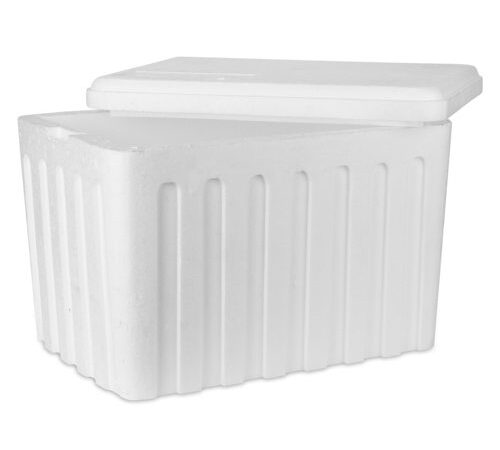
Store dry ice in a thick-walled thermocol box, never in a sealed container, and use it within a day or two of delivery — it sublimates even in storage, roughly 5 to 10 percent per day in a good box.
For restaurants, pharmacies, and food businesses, the stakes are higher: a freezer full of stock is worth far more than the dry ice that protects it. A regular weekly order — even a small one — means the backup is always in the building when the lights go out.
The Load-Shedding Backup Checklist
Know your freezer’s hold time — about 48 hours full and unopened, less in summer. Keep 2 to 5 kilograms of dry ice on hand in a thermocol box during the hot months. Put it on top of the food, wrapped, with the door shut and the room ventilated. Handle it with gloves, never seal it in, and order before the outage, not after it.
Order Providers delivers dry ice across Karachi the same day, including during load-shedding hours. Message us on WhatsApp for a quote, or browse dry ice and thermocol boxes in our shop.
Frequently Asked Questions
How long will 2 kg of dry ice keep my freezer cold?
In a standard home freezer with the door shut, 2 to 3 kilograms holds the temperature for roughly 12 to 18 hours. A larger or half-empty freezer needs more.
Can I put dry ice directly in my freezer?
Yes. Place it on the top shelf, wrapped in newspaper or cloth, so it never touches food packaging directly. Never seal the freezer door shut or block the vents — the carbon dioxide gas needs to escape.
Is dry ice safe to use at home?
Yes, with basic care: always wear gloves, keep the room ventilated, keep it away from children and pets, and never store it in a sealed or glass container.
How long does dry ice last in storage?
In a good thick-walled thermocol box, dry ice loses roughly 5 to 10 percent per day. Order it when you need it and use it within a day or two — it is a backup supply, not something to stock for weeks.