
A school canteen in Karachi serves hundreds of children at lunch, and the food that reaches them has to be safe and at the right temperature. The journey from a supplier’s kitchen to a school in Gulshan, North Nazimabad, or Korangi is where most of the risk sits — a van stuck in traffic at noon, a box left in the sun, a cold chain that breaks halfway. This guide covers how school canteen suppliers keep lunch safe in transit across Karachi.
1. The 4-Hour Rule: Why Transit Time Matters
Cooked food should not sit in the danger zone — roughly 5°C to 60°C — for more than four hours in total. In Karachi’s heat, a meal packed at 8 am and delivered at 1 pm can easily cross that line if it was never properly chilled or held hot. The rule for canteen suppliers is simple: know your route time, and plan the packing around it, not around hope.
For hot meals, that means insulated hot boxes that hold food above 60°C until serving. For cold items like sandwiches, yoghurt, and fruit cups, it means the opposite — a cold chain that holds them below 5°C from the kitchen to the canteen counter. Mixing the two in one box is the most common mistake: the hot food warms the cold food, and both end up in the danger zone together.
2. Insulated Boxes Are the Backbone of Canteen Supply
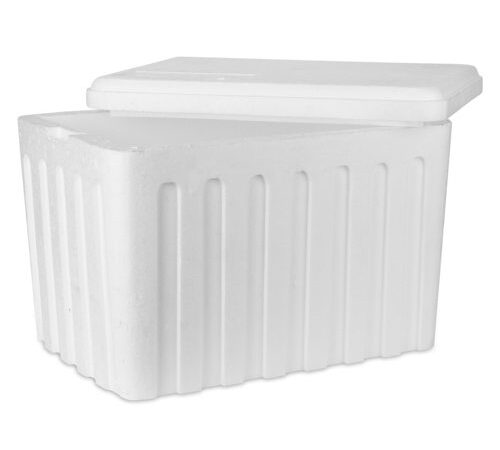
A good thermocol box does more work than any fridge on a delivery van. Thick-walled EPS boxes hold temperature for hours without power, which matters in a city where load-shedding can strike a school mid-morning and a delivery van has no refrigeration at all. A 5 kg thermocol box carries a full canteen crate of packed lunches; smaller 3 kg boxes suit single-class deliveries or snack runs.
Pack the box properly: pre-chill it the night before for cold items, or pre-heat it with hot water for hot meals. Fill empty space with crumpled paper or a towel — air gaps are where heat creeps in. Keep the lid closed between stops, and never leave a loaded box on the van floor in direct sun through the windscreen. Our guide to thermocol box sizes and prices in Karachi helps you match the box to the load.
3. Dry Ice for Cold Lunches in Summer
From April to October, Karachi’s heat defeats regular ice. Ice packs melt within an hour or two, and the meltwater soaks packaging. Dry ice, at around -78.5°C, keeps a thermocol box frozen for a full school-day route without a drop of water — and a small amount goes a long way. One to two kilograms in a 5 kg box keeps sandwiches, dairy, and fruit cups safely cold for four to six hours.
Keep dry ice wrapped in newspaper or a cloth, never in direct contact with food packaging, and never seal the box airtight — the carbon dioxide gas needs a way out. For suppliers running a daily school route, ordering a regular weekly supply works out cheaper than buying single packs. Our bulk dry ice guide for Karachi businesses explains how weekly orders are priced.
4. Packing for Children: Portions, Hygiene, and Spills
Canteen food is handled by children, so packaging has to survive being dropped, squeezed, and carried in a school bag. Individual sealed portions beat large shared trays: they portion-control naturally, they stay sealed until eaten, and if one pack is damaged the rest of the delivery is untouched.
Use food-grade cling film or sealed containers, never newspaper or reused plastic bags. Label each box with the school name, the delivery time, and the contents — when a van serves three schools on one route, a mislabelled box is a missed lunch.
5. Planning Routes Around Karachi Traffic
A route that looks fine on a map can fall apart at 12:30 pm outside a school gate. Plan deliveries so the farthest school is served first, while the food is at its freshest, and the nearest school last. Avoid the worst bottlenecks — University Road, Shahrah-e-Faisal at peak hours, and the Saddar area — or build an extra thirty minutes into the schedule for them.
Deliver in the morning when the temperature is lower and the roads are clearer, even if lunch is hours away: a properly packed insulated box holds food safely until serving. And always carry a spare box and extra dry ice on the van. If a school’s fridge is off because of load-shedding, that spare box is the difference between serving lunch and sending children home hungry. Our guide to how long frozen food stays frozen in a power cut covers the same problem from the storage side.
The Daily Checklist for Canteen Suppliers
Pack hot and cold items separately. Pre-chill or pre-heat the box. Use dry ice for cold items in summer, and never seal a box containing it. Label every box, log every delivery time, and keep the route planned around traffic, not against it. That is the whole system — and it keeps school lunch safe from the kitchen to the canteen counter.
Order Providers supplies dry ice and thermocol boxes to food businesses across Karachi, with same-day delivery. Message us on WhatsApp for a regular weekly supply for your school route, or browse dry ice and packaging in our shop.
Frequently Asked Questions
How long can packed school lunch stay safe in a thermocol box?
Properly packed cold food in a thick-walled thermocol box with dry ice stays below 5°C for four to six hours. Hot food in a pre-heated insulated box stays above 60°C for three to four hours. Either way, the total time in the danger zone should stay under four hours.
Is dry ice safe to use around children’s food?
Yes, when used correctly. Dry ice is frozen carbon dioxide and never touches the food directly — it sits wrapped in the box and cools the air inside. It must never be put in a sealed container, and it should always be handled with gloves.
What size thermocol box suits a school canteen delivery?
A 5 kg box suits a full crate of packed lunches for one school, while a 3 kg box works for single-class or snack deliveries. Suppliers running several schools on one route usually carry a mix of both sizes.
Can dry ice be delivered daily to a canteen supplier in Karachi?
Yes. We deliver same-day across Karachi, including Gulshan, North Nazimabad, Korangi, and DHA, and weekly standing orders are available for suppliers on a regular school route.