
Nothing ruins the mood like opening a delivery box of frozen prawns, ice cream, or medicine to find it soft, sweating, and lukewarm. It happens to Karachi shoppers, restaurants, and online sellers every week — and in most cases, it was preventable. Frozen deliveries arrive thawed for a handful of specific, fixable reasons, not because the heat made it impossible.
This guide walks through the six most common causes of thawed deliveries and the exact fixes that keep frozen goods frozen from door to door in Karachi.
1. Not Enough Coolant for the Distance
The number one cause is simple: the box did not contain enough dry ice or gel packs for the trip. A common mistake is packing for a 30-minute hop when the delivery will actually take two hours through Karachi traffic in May heat. As a rough rule, you need about 5 kg of dry ice per 24 hours of transit in a well-insulated box — which means a 2 to 3 hour delivery across the city needs at least 1 to 2 kg, not a token handful.
Gel packs are even easier to under-use. One small gel pack in a cardboard box will not survive a DHA-to-Gulshan run at noon. Our dry ice quantity guide shows how to size coolant for your route, and our dry ice vs gel packs comparison explains when each option wins.
2. Wrong Packaging — Regular Cardboard Does Almost Nothing
Many sellers still ship frozen food in ordinary cardboard cartons or plastic grocery bags, sometimes with a sheet of newspaper for “insulation.” This fails fast. Cardboard has almost no thermal resistance; within an hour in Karachi’s heat, the box inside matches the temperature outside.
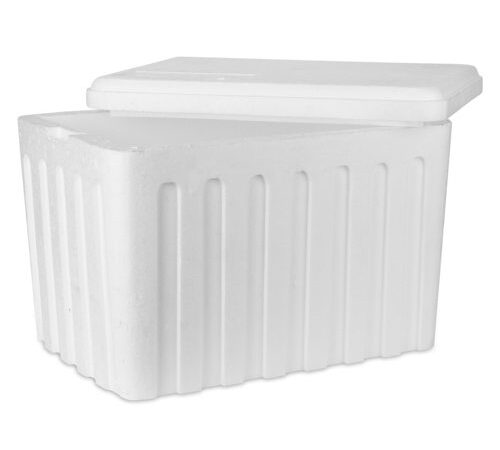
What actually works is an insulated container: an EPS thermocol box, which slows heat transfer dramatically and keeps the cold where it belongs. A 3 kg thermocol box costs little and transforms delivery reliability overnight. Our guide to thermocol box sizes and prices in Karachi helps you pick the right one for your orders.
3. Too Much Empty Space in the Box
A half-empty box thaws faster than a full one. The warm air trapped in the empty space circulates heat straight to your product, and the coolant has to chill that air before it can protect the food. This is the most overlooked packing error — even experienced sellers do it.
The fix: fill the dead space. Pack frozen goods tightly, add crumpled newspaper or extra thermocol sheets in the gaps, or simply use a smaller box. A full box is a colder box. If you regularly ship mixed loads, keep two box sizes on hand — a 3 kg and a 5 kg box cover most small-business orders.
4. Timing and Karachi’s Traffic
A delivery that leaves at 10 am and takes 45 minutes arrives frozen. The same delivery leaving at 1 pm can take two and a half hours through gridlock, with the box baking in a rickshaw or bike top-box the whole time. Karachi’s midday heat and traffic are not just an inconvenience — they are a cold-chain variable you have to plan for.
Smart sellers dispatch frozen orders early in the morning or after 5 pm, avoid the 12-to-3 pm window entirely, and keep riders’ boxes shaded. If same-day noon delivery is unavoidable, double the coolant.
5. Sealing the Box Airtight With Dry Ice Inside
This one causes failures in a different way. Dry ice turns into carbon dioxide gas as it sublimates, and a fully sealed box builds pressure — which can pop the box open mid-transit, dumping your cold air on the road. Always leave a small gap or loosely close the lid so gas can escape.
A related error is placing dry ice directly against the food. At roughly -78.5°C it will freeze-burn uncovered products and can shatter glass jars. Wrap food in poly bags first and keep dry ice above the goods, since cold sinks. Our 10 dry ice safety rules cover the full handling checklist.
6. Sellers Who Simply Do Not Pack Properly
Some sellers treat frozen delivery like any other parcel: toss it in a bag, hand it to the rider, hope for the best. If you receive orders from such a seller more than once, the pattern will repeat. Before ordering frozen goods online, ask the seller three questions: Do you pack in thermocol? Do you use dry ice or gel packs? What happens if the order arrives thawed?
Sellers who cannot answer clearly are telling you something. Reliable Karachi sellers pack frozen orders in insulated boxes with proper coolant as standard — it is not a premium add-on. Our frozen food supplier checklist gives buyers a full set of questions to ask before placing a big order.
The Fix, in One Checklist
If you are sending frozen goods: use a thermocol box, add enough dry ice or gel packs for the full route plus a margin, fill the empty space, dispatch outside the midday heat, never seal dry ice boxes airtight, and keep dry ice off direct contact with food. That is the entire recipe — and it works every time.
Order Providers delivers dry ice and thermocol boxes across Karachi the same day, so there is no reason to skimp on coolant. Message us on WhatsApp for the right quantity for your route, or browse dry ice and packaging in our shop.
Frequently Asked Questions
Why did my frozen food thaw even though the seller used ice packs?
Most likely there were too few packs, the wrong packaging, or too long in transit. One or two small gel packs cannot protect a carton for a two-hour Karachi delivery. Proper insulated packaging plus adequate coolant is what actually holds the temperature.
Can frozen food be refrozen after it arrives thawed?
Only if it is still cold — at or below 4°C. If it arrived fully thawed and warm to the touch, cook it the same day or discard it; refreezing it is not safe. Seafood and minced meat are the least forgiving.
How much dry ice should a seller use for a Karachi delivery?
For a typical 2 to 3 hour delivery across the city, 1 to 2 kg of dry ice in a thermocol box is a sensible minimum. Longer routes, bigger boxes, or midday dispatch need more. Our quantity guide covers exact sizing.
Is it the rider’s fault if my order arrives thawed?
Not usually. Riders deliver what they are given. If the box was packed correctly — insulated, enough coolant, filled tight — even a slow trip through traffic arrives frozen. Thawed arrivals are almost always a packing problem, not a rider problem.