
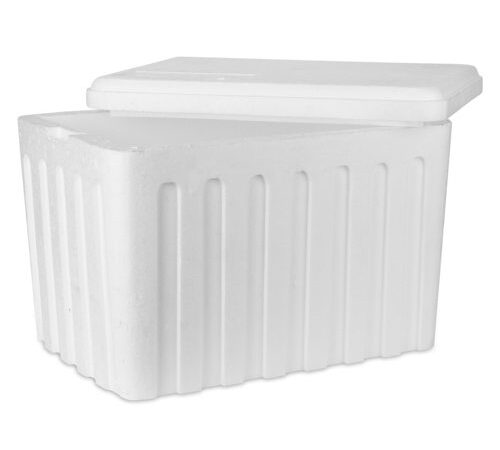
Two thermocol boxes can look identical from the outside and perform completely differently. One keeps frozen prawns solid for a full day across Karachi; the other lets them soften by lunchtime. The difference is rarely the brand or the price — it is the thickness of the walls, and how that thickness matches the job.
This guide explains why EPS thermocol thickness matters for frozen goods, how to choose the right wall thickness for your shipment, and the packing mistakes that waste even the thickest box.
What EPS Thermocol Actually Does
EPS, short for expanded polystyrene, is the white foam used in thermocol boxes. It is mostly trapped air — around 98 percent air by volume — and still air is a very poor conductor of heat. That is why a foam box insulates so well for its weight: heat from outside has to travel slowly through thousands of tiny air pockets before it can reach the frozen goods inside.
Thickness matters because insulation is a matter of distance. A thicker wall means heat must travel further, so it arrives more slowly. Doubling the wall thickness does not quite double the protection time, but it makes a real and measurable difference, especially on long journeys or hot days. A thin box that is fine for a two-hour delivery across town will fail on an overnight trip to Lahore, even with the same amount of dry ice inside.
How Thickness Translates to Holding Time
As a rough guide for frozen goods packed with dry ice, a box with walls around 20mm thick suits short local deliveries of a few hours. Walls of 30–40mm are the workhorse range for most Karachi same-day deliveries, holding frozen food solid for a full working day in summer when packed properly. Walls of 50mm or more are for long-distance or overnight shipments, where the box must keep working through an afternoon in a hot van and a night in a warehouse.
These are guides, not guarantees: holding time also depends on dry ice quantity, how full the box is, and shade versus sun. A half-empty thick box performs worse than a full thin box. Always fill dead space with insulation, and pack for longer than the quoted journey time. Our dry ice quantity guide explains matching coolant to journey length.
Choosing the Right Box for Your Goods
For most Karachi food businesses, the choice comes down to three questions: how long is the journey, how hot will it be, and how valuable is the product? A home delivery of frozen parathas across DHA in the morning needs far less protection than a consignment of IQF prawns going to a restaurant in Hyderabad overnight, and it would be wasteful to pack both the same way.
Size matters alongside thickness. The common 3kg and 5kg thermocol boxes in Karachi suit different orders, and choosing the smallest box that fits your goods — with room for coolant — beats a large box with empty space every time. Our guide to thermocol box sizes in Karachi walks through the 3kg versus 5kg choice in detail, and our guide to shipping frozen food in Pakistan without it thawing covers the full packing method.
Check the box itself before you buy in bulk. Walls should be even all round, with no thin patches at the corners or the base, where heat enters fastest. The lid should sit flush with no gaps, because a lid that rocks or leaves a slit leaks cold air continuously — a 50mm wall is useless if the lid does not close. If you reuse boxes, inspect them for cracks and dents: a cracked corner can cut holding time dramatically, and a box that has been crushed in storage insulates far less than a new one.
Mistakes That Waste a Thick Box
The most common mistake is packing warm goods. A box cannot rescue food that was already softening before it went in; chill or freeze everything fully before packing, and pre-chill the box itself with a little dry ice if you have it to spare. The second mistake is sealing the box airtight when using dry ice. Dry ice turns into gas as it sublimates, and a completely sealed box can build up pressure. Leave a small vent or do not tape every seam shut, and read our dry ice safety guide before your first shipment.
The third mistake is ignoring the journey after dispatch. A thick box left on a sunny doorstep, in the boot of a parked car, or at a building reception for hours will eventually lose, however well it was packed. Tell the customer the delivery window, ask them to refrigerate or freeze the goods immediately on arrival, and avoid dispatching long-distance parcels on a Friday afternoon if they will sit untouched over the weekend.
Thickness is not a luxury extra — it is the cheapest insurance on a frozen shipment. Spending a little more on the right wall thickness protects the product, the customer relationship, and the repeat order that follows a delivery arriving frozen solid. Message Order Providers on WhatsApp with what you are shipping, where it is going, and how long the journey takes, and we will recommend the right box size and thickness. You can also browse thermocol boxes and dry ice in our shop.
Frequently Asked Questions
Does thicker thermocol always mean better insulation?
Yes, up to a point: thicker walls slow heat transfer and extend holding time. But a thick box with a badly fitting lid, cracks, or lots of empty space inside will still perform poorly, so check the lid seal and fill dead space as well as choosing thickness.
What thickness do I need for a same-day delivery in Karachi?
For most same-day frozen deliveries, walls of 30–40mm with the right amount of dry ice are a reliable choice in summer. Short trips of a couple of hours can manage with around 20mm, while overnight or intercity shipments should use 50mm or more.
Can I reuse a thermocol box?
Yes, if it is undamaged. Check for cracks, crushed corners and a lid that still sits flush. A damaged box insulates far less than a new one, so retire boxes that no longer close properly rather than risking a thawed delivery.
Is a bigger box better for keeping food frozen?
Not on its own. A bigger box with empty space inside warms faster than a smaller, well-filled box, because the empty air wastes cold. Choose the smallest box that fits your goods plus coolant, and fill any remaining gaps with insulation.