
School canteens in Karachi serve hundreds of children every day, and frozen snacks — samosas, nuggets, shami kebabs, fries, parathas — are the easiest way to keep the menu full without a large kitchen staff. But frozen snacks are only safe and tasty if they stay frozen until cooking. A canteen that gets this right serves hot, crisp snacks all day; one that gets it wrong serves soggy food and risks children’s health.
This guide is for school canteen operators and the suppliers who serve them. It covers choosing frozen snacks, storing them safely, and keeping them cold through Karachi’s heat and load-shedding.
Why Frozen Snacks Suit School Canteens
A school canteen has a short, intense serving window — usually one or two breaks. Cooking everything from scratch in that time is impossible with a small team. Frozen snacks solve the problem: they are portioned, consistent, and quick to fry or bake.
Frozen snacks also cut waste. A canteen buys a week’s stock, keeps it frozen, and cooks only what it needs each day.
Choosing the Right Frozen Snacks
Not every frozen snack suits a school canteen. The best choices share three qualities: they cook fast, they hold their texture, and children actually want them. Nuggets, samosas, shami kebabs, spring rolls, and fries are the reliable sellers. Items that need long cooking or careful handling — like large parathas or marinated meats — are better left to restaurants.
Buy from a supplier who delivers frozen, not half-thawed. Check the packaging on arrival: it should be sealed, with no ice crystals inside the bag and no soft spots. A supplier who packs in thermocol boxes with dry ice is protecting your stock; one who delivers in a plain plastic bag in the afternoon heat is not. Our guide to choosing a frozen food supplier in Karachi has a full buyer’s checklist.
Storing Frozen Snacks Safely
The rule is simple: frozen snacks stay at -18°C or below from delivery to cooking. A chest freezer is better than an upright freezer for a canteen because it holds its temperature longer when the lid is opened and closed all day — and it keeps working longer during load-shedding.
Portion the stock into daily bags. If the canteen uses 5 kg of nuggets a day, bag them in 5 kg portions and label each bag with the date. That way the cook takes one bag per day and the rest stays frozen. Thawing a whole week’s bag for one day’s cooking, then refreezing the leftovers, is the most common mistake — it ruins the texture and is unsafe.
Keep raw frozen items separate from ready-to-eat food. A dedicated freezer for snacks, or at least a clearly marked section, avoids cross-contamination. And keep a thermometer in the freezer — a cheap one is enough — so the staff can check the temperature instead of guessing.
Keeping Stock Cold During Load-Shedding
Load-shedding is the biggest threat to a school canteen’s frozen stock. A freezer that stays shut holds its temperature for several hours, but a canteen freezer gets opened constantly during break time. The answer is dry ice as backup.
Keep 2 to 3 kg of dry ice pellets on the top shelf of the freezer during the hot months. It keeps the temperature down for hours when the power cuts, and it costs far less than losing a week’s stock. Our guide to how long dry ice keeps your freezer cold explains the quantities for different freezer sizes.
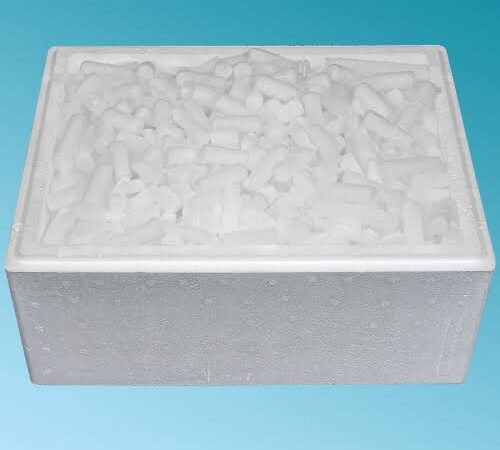
For deliveries between the supplier and the school, a thermocol box with dry ice keeps snacks frozen on the journey. The 5 kg thermocol box is the practical size for a weekly canteen delivery. See our guide to thermocol box sizes and prices in Karachi for the full range.
Serving Day: From Freezer to Counter
Good canteen service is about timing. Take the day’s portion out of the freezer shortly before the break, cook it fresh, and serve it hot. Snacks cooked an hour early and left on a counter go soggy and lose their appeal — children will not buy them twice.
Keep the serving counter clean and covered, and never mix freshly cooked snacks with leftovers from the previous break. At the end of the day, count what is left, note it on the stock sheet, and put the unopened bags back in the freezer straight away.
Ordering Supplies for Your Canteen
Canteens order little and often, so a supplier that delivers the same day matters. Dry ice prices at Order Providers are simple: 2 kg at Rs 1,450, 5 kg at Rs 2,950, 10 kg at Rs 5,950, 15 kg at Rs 10,750, and 20 kg at Rs 11,450, with bulk orders of 40 kg and above at Rs 400 per kg. Delivery charges within Karachi are Rs 250 to Rs 750 depending on distance, and we deliver to every neighbourhood — see our guide to Karachi areas we deliver to.
Browse the full range on our shop — dry ice packs and thermocol boxes in every size — and message us on WhatsApp at 0320-3921038 for a quote. Cash on delivery and bank transfer are both accepted.
Frequently Asked Questions
How much dry ice does a school canteen need?
Most canteens need 2 to 5 kg a week — mainly as load-shedding backup for the freezer and for keeping deliveries frozen on the journey from the supplier. Larger canteens may need 10 kg.
How long can frozen snacks stay in a thermocol box?
With dry ice, a good thermocol box holds frozen snacks for 24 hours or more. Without dry ice, expect only a few hours in Karachi’s summer heat — always add dry ice for deliveries longer than a short trip.
Can frozen snacks be refrozen after thawing?
No. Once a frozen snack has thawed, it should be cooked and served, not put back in the freezer. Refreezing ruins the texture and can be unsafe. Portioning into daily bags avoids the problem entirely.
What temperature should a canteen freezer hold?
At -18°C or below. Keep a thermometer in the freezer and check it daily, especially during load-shedding. If the temperature rises above -10°C, cook the stock the same day or move it to a thermocol box with dry ice.