
Ice cream is the hardest frozen product to deliver in Karachi. Most frozen foods survive a little softening; ice cream does not. Let it climb above about −10°C and the texture is ruined — icy, grainy, never the same even after refreezing. And in a Karachi summer, with 40°C air and traffic that crawls, the cold has no mercy.
But ice cream delivery absolutely works here — parlours, cloud kitchens, and home businesses do it every day. The secret is not luck; it is the right cooling, the right box, and a packing order that treats summer like the enemy it is.
Why Ice Cream Is Different
Frozen prawns can thaw and refreeze and still cook fine. Ice cream cannot. When ice cream partially melts, the tiny ice crystals grow into big ones and the air whipped into it collapses. Refreezing just locks in the damage — you get a tub of ice crystals that used to be dessert.
That means the delivery target is stricter than any other frozen food: the tub must arrive at or below −10°C, ideally −15°C or colder, with no partial thaw anywhere in the trip. Only one cooling medium holds that on a Karachi route: dry ice at −78.5°C.
Why Only Dry Ice Works for Ice Cream
Gel packs start at −18°C and warm steadily — on a 45-minute summer delivery they may just about hold, but add traffic, a rider delay, or a multi-order route and the ice cream softens. Regular ice at 0°C is not even in the conversation.
Dry ice holds −78.5°C and sublimates into gas instead of melting into water, so the box stays dry and the cold stays deep for 24–48 hours in a good box — far beyond any Karachi delivery route. That margin is exactly what protects the product when a rider gets stuck on Shahrah-e-Faisal. Our quantity guide has the maths for sizing your load.
The Right Box for Ice Cream
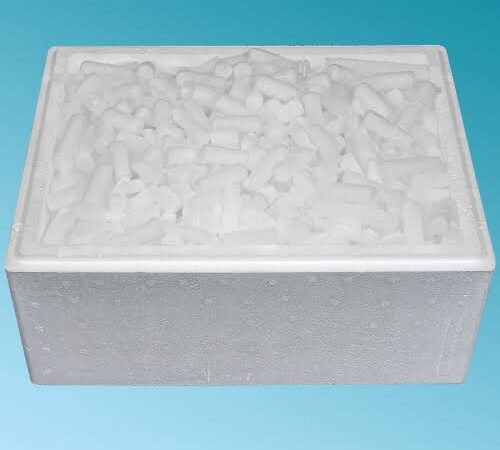
A thick EPS thermocol box is non-negotiable. The standard choice is a 3kg box for 1–4 tubs and a 5kg box for larger or multi-stop orders. Thicker walls mean slower heat entry and longer dry ice life. See our thermocol box sizing guide for exact dimensions and how to pick.
Three rules for the box: it must close firmly but never be airtight — dry ice gas needs an escape path, or pressure builds. Line the inside with a paper barrier between the dry ice and the tubs so the extreme cold does not freeze-burn the packaging. And tape the lid shut for the ride, but never wrap the box in airtight shrink film.
The Packing Order That Works
Pack like this, every time:
- Chill the thermocol box first — put the dry ice in 15–20 minutes before loading so the walls are cold, not warm.
- Place a layer of dry ice at the bottom of the box.
- Add a paper or cardboard barrier over the dry ice.
- Load the ice cream tubs upright and snug — no rattling space, fill gaps with crumpled paper.
- Pack dry ice on top as well, since cold sinks. Top placement is what protects against the heat coming through the lid.
- Close the lid, tape it, and hand it to the rider immediately. Every minute the box sits open in 40°C air costs you.
That top-and-bottom sandwich is the same method professional frozen-food shippers use, covered in our frozen food shipping guide.
How Much Dry Ice for Ice Cream Runs?
For same-city Karachi deliveries (1–3 hours door to door), 1–2kg of dry ice per box is usually enough in a 3kg thermocol box. For multi-stop rider routes that stretch to 4–5 hours, use 2–3kg. The cost per order is small — a fraction of the tub’s price — and it is what guarantees the product quality your reviews depend on.
Always order dry ice for the day of delivery, not the day before. It sublimates steadily in storage, and yesterday’s dry ice is today’s warm box.
Route Planning Tips for Summer
Packing is half the battle; the route is the other half. Batch deliveries by neighbourhood instead of zig-zagging across the city — DHA orders together, Gulshan orders together. Tell customers a realistic window rather than a tight one you cannot keep. And brief your rider: the box stays closed at every stop, opened only for the tub being handed over.
If a customer is not home, the rider should not wait in the sun with the box open. Set a policy — call once, wait two minutes, move on — and communicate it at order time. One abandoned wait in July heat undoes perfect packing.
What to Tell Your Customers
A short note in every order builds trust and protects you from unfair complaints: “Packed with dry ice in an insulated box — please refrigerate or serve within 2 hours of delivery.” It sets expectations, explains any light frost on the tub, and reminds the customer that the product left your kitchen in perfect condition.
Frequently Asked Questions
Can I deliver ice cream with gel packs instead of dry ice?
For very short trips (under 30 minutes) on a mild day, gel packs can work. But in Karachi summer heat, with traffic delays, gel packs warm too fast to guarantee ice cream stays below −10°C. Dry ice is the reliable choice.
Will dry ice make the ice cream too hard or damage it?
No — commercial ice cream is stored at −18°C or colder anyway. Dry ice keeps it in that same range. Just use a paper barrier so the dry ice does not touch the tubs directly.
How long does dry ice last in a delivery box?
In a good 3kg or 5kg thermocol box, dry ice lasts 24–48 hours — far longer than any local delivery route. The limit on your delivery window is the rider’s route, not the cold.
Is dry ice safe to deliver to homes?
Yes, with basic guidance. Include a one-line note: “Do not touch the dry ice with bare hands; leave any leftovers in the ventilated box to evaporate.” Full handling rules are in our dry ice safety guide. Browse our shop for dry ice and thermocol boxes sized for delivery work.