
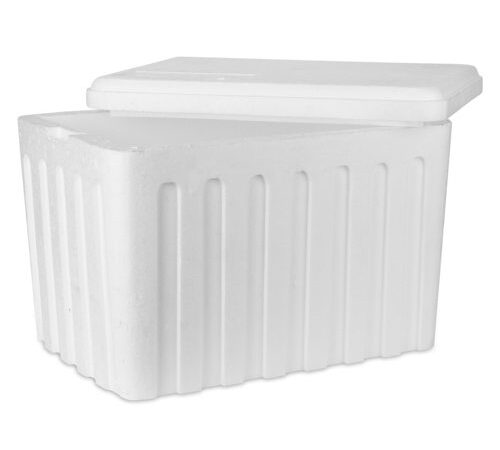
A thermocol box costs a few hundred rupees and survives one, maybe two trips before it cracks. A reusable insulated container costs several thousand — and survives hundreds. For a Karachi business ordering dry ice every week, that maths matters. But a reusable container is not just a tougher box: it changes how you pack, how you clean, and how your deliveries look when they arrive.
What a Reusable Insulated Container Is
A reusable insulated container is a rigid, hard-walled box with thick insulation — usually polyurethane foam sandwiched between plastic or fibreglass shells — a tight-fitting lid, and often a rubber gasket seal. Unlike a thermocol box, it does not crush, it does not absorb water, and it can be washed and used again. Most models have latches or straps to hold the lid shut, and some have handles or wheels for heavier loads.
The insulation is the point. A good reusable container holds temperature for longer than a thermocol box of the same size, because the foam is denser and the seal is tighter. That means less dry ice per trip, or the same dry ice lasting longer — which matters on long Karachi routes in summer heat.
When Reusable Beats Disposable
Reusable containers make sense when deliveries run on a loop: the same route, the same customer, several times a week. A restaurant chain sending frozen ingredients between branches, a pharmacy delivering insulin to the same clinics, or a seafood supplier serving the same hotels — all of these can get the container back after each trip. If your deliveries are one-way, to customers you will never see again, a disposable thermocol box is the cheaper choice, because you will never recover the container.
Volume matters too. If you order dry ice once a month, a reusable container will sit in a corner gathering dust, and the money is better spent elsewhere. If you order several times a week, it pays for itself quickly: fewer boxes to buy, less packaging waste, and a more professional look when the delivery arrives. Our thermocol box guide covers the disposable side, so you can compare the two options for your own volumes.
Choosing the Right Size and Type
Size the container to your load, not your ambition. A container that is too big wastes dry ice cooling empty air; one that is too small forces you to over-pack and crush the goods. Measure your typical load and choose a container with a little room to spare for the dry ice itself. Remember that dry ice goes at the bottom, with a cardboard barrier between it and the goods, exactly as in a thermocol box.
Check three features before buying. First, the seal: the lid should close firmly with a gasket or latch, with no gap you can see light through. Second, the drain: some containers have a drain plug, useful if you ever carry regular ice — but keep it closed when carrying dry ice, since you want the cold gas to stay inside. Third, the material: food-grade plastic interiors are easiest to clean, and a smooth interior with no deep corners means no frozen food gets trapped in crevices.
Packing Dry Ice in a Reusable Container
Packing is the same as in a thermocol box, with two differences. First, never seal a reusable container airtight. Dry ice releases carbon dioxide gas as it sublimates, and a latched, gasket-sealed container can build up pressure. Leave the drain plug open a crack, or use a container with a pressure-release vent, so gas can escape. A container that pops its lid open in the van is a warning sign that gas had nowhere to go.
Second, protect the interior. Dry ice at -78°C can crack some plastics if it sits directly against them for hours, so always put a cardboard or foam barrier between the dry ice and the container walls and floor. Place the dry ice at the bottom, the barrier on top, then the goods. If you are shipping temperature-sensitive medicine, add a temperature data logger in the middle of the goods — it gives you a full temperature record for the trip and proves the cold chain held.
Cleaning, Care, and Getting Them Back
A reusable container only stays reusable if you clean it. After each trip, empty it completely, wipe the interior with warm water and a mild detergent, and leave it open to dry before the next use. Never use harsh solvents, which can damage the plastic and leave residues near food. Check the gasket seal regularly — a perished seal leaks cold air and wastes dry ice — and replace it when it goes stiff or cracked.
The hardest part of a reusable system is getting the containers back. Build the return into the delivery itself: the driver collects the empty container from the previous delivery when dropping off the new one. Charge a refundable deposit if customers are slow to return them, and keep a simple log — container number, customer, date out, date back — so you know where each one is.
Frequently Asked Questions
How long does a reusable insulated container last?
A well-made container used several times a week typically lasts two to five years. The lid seal usually wears out first; replacing the gasket is cheap and restores the insulation. Avoid dropping the container or stacking heavy loads on the lid, which are the main causes of early failure.
Can I use a reusable container for dry ice and regular ice?
Yes, but not at the same time in the same container, and clean it between uses. Regular ice produces meltwater, which needs the drain plug open; dry ice needs ventilation for gas. Use the container for one cooling method per trip and clean it thoroughly before switching.
Is a reusable container better than thermocol for same-day Karachi deliveries?
For a single one-way delivery, thermocol is cheaper and simpler. For repeat routes where you get the container back, reusable is better: it holds temperature longer, looks more professional, and costs less per trip over time.
Do I need a special container for medicine or vaccine deliveries?
Medicine shipments need validated temperature control, so use a container rated for the required range and always include a data logger. Check our guide to dry ice for vaccine and medicine transport for the temperature ranges that apply.
Need dry ice for your reusable containers? Message us on WhatsApp at 0310 2395910 for a quote — same-day delivery across Karachi, in any quantity your routes need. Browse the full range in our shop.